
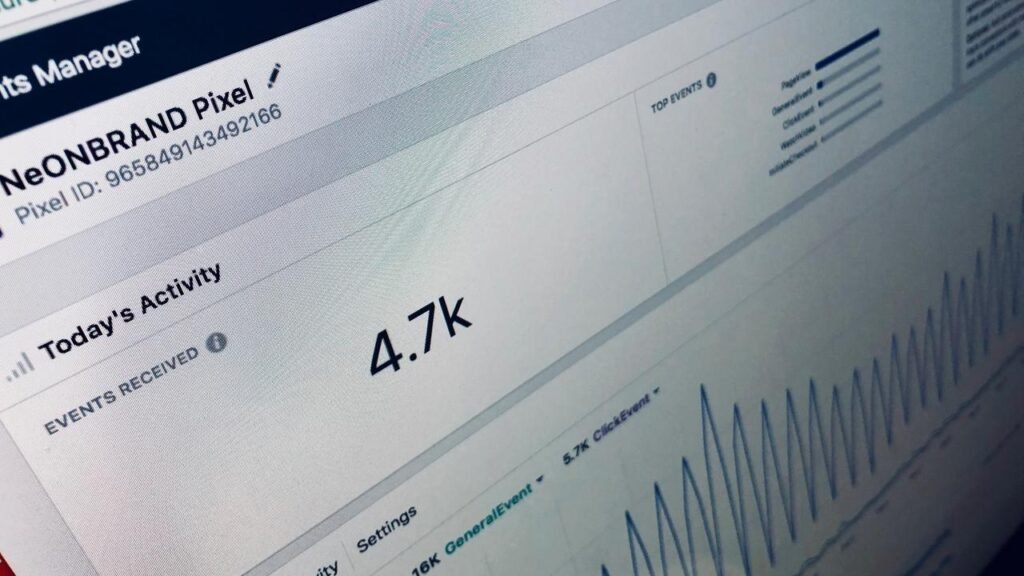
Quick Summary: As reported by Yahoo News, Overnight, millions of iPhone users opted out of being tracked, leaving platforms like Facebook blind. INGAGE CEO Katherine Doble argues that this “Data Blackout” is not a glitch to be waited out; it is the new permanent reality. The era of “renting” your audience via third-party cookies is over. The era of “owning” your audience has begun.
The Inherent Friction: “Lazy Targeting” Vs. “Creative Filtering”
For a decade, advertisers relied on a “Surveillance Model.” You didn’t need to be a good marketer; you just needed to pay Facebook to find exactly the right person who had visited your site yesterday. For years, advertisers have relied on the ‘lazy targeting’ of the Facebook Audience Network to find customers for them. That era is over. With Apple’s rollout of iOS14, the ability to track users across apps has been severed. As reported by Axios, this shift forces a return to ‘Creative Filtering’—where the content itself, not the algorithm, must do the heavy lifting.
Now, we face a friction between Algorithm Reliance and Creative Necessity.
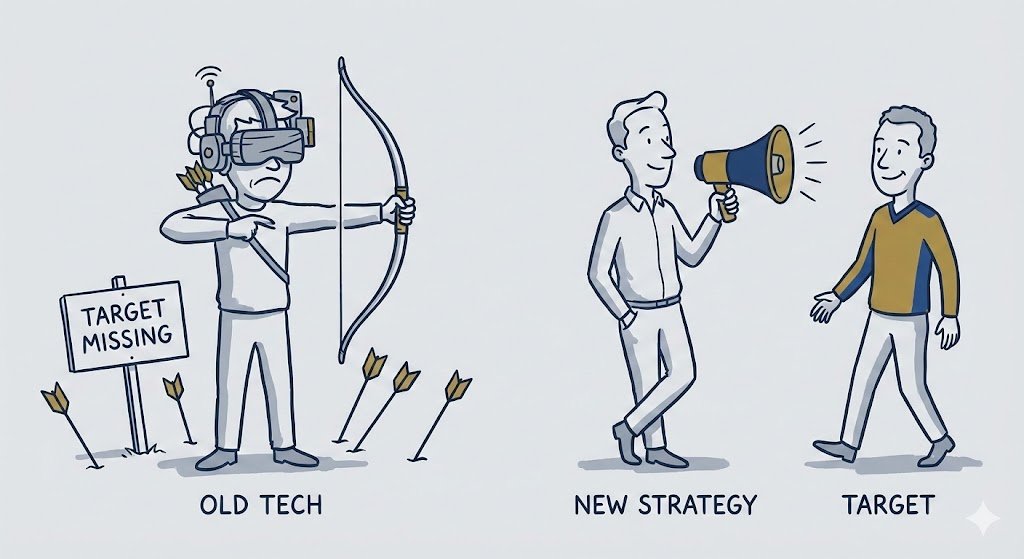
The Old Way: “Let the pixel do the work.” Advertisers uploaded weak creative, trusting the algorithm to force it in front of the right eyeballs.
The New Reality: The pixel is effectively blind for 60-80% of mobile users.
This creates a crisis for lazy marketers. Without the crutch of micro-targeting, brands are forced to return to the fundamentals of Persuasion. If the algorithm can’t find your customer, your message must be strong enough to make the customer find you.
Why This Disconnect Is Dangerous
Katherine Doble warns that businesses waiting for a “workaround” are bleeding money every day they delay.
Skyrocketing Costs: Without precise targeting, “Cost Per Acquisition” (CPA) has doubled for many brands. You are now paying to show ads to people who don’t care.
The “Lookalike” Illusion: Audiences based on “people like your customers” are now built on incomplete, modeled data. They are far less accurate than they were in 2020.
Platform Hostage: If your entire business model relies on Facebook’s ability to track users across the web, you are building your castle on sand that Apple just washed away.
The INGAGE Methodology: “Zero-Party Data”
The solution is not to find a way to track people without their consent (which is illegal and unethical). The solution is to get them to volunteer their data.
Katherine Doble advocates for a pivot to “Zero-Party Data.” This is data a customer intentionally gives you (like answering a quiz, signing up for a waitlist, or choosing a preference). Unlike “Third-Party Data” (which is stolen/bought), Zero-Party Data is owned by you, accurate, and immune to Apple’s privacy updates.
Comparison: The Data Economy
The asset class of marketing has shifted.
| Feature | Third-Party Data (The Old Gold) | First/Zero-Party Data (The New Gold) |
| Source | Scraped from user behavior (cookies) | Given voluntarily by the user |
| Accuracy | Inferred (often wrong) | Explicit (100% correct) |
| Ownership | Owned by Meta/Google | Owned by You (The Brand) |
| Cost | Rented (Monthly Ad Spend) | Earned (One-time Acquisition Cost) |
| Risk | High (Vulnerable to Privacy Laws) | Low (Compliant by default) |
3 Steps To Survive The “Data Blackout”
Based on the insights from the Yahoo News feature, here is how to pivot your ad strategy.
1. Broaden Your Targeting, Sharpen Your Copy
Stop trying to target “Women, 25-34, who like Yoga and live in Miami” in the ad settings. The data isn’t there.
Action: Target “Women, 25-50” (Broad) but write the headline: “The Yoga Mat for Miami Heat.” Let the copy call out the audience, not the settings.
2. The “Bridge Page” Strategy
Don’t send ad traffic directly to a product page. You lose 98% of them.
Action: Send traffic to a “Bridge Page”—a piece of high-value content (e.g., a guide, a quiz, or a checklist) that requires an email exchange. This captures the lead before you try to sell, moving them from “Rented Land” to “Owned Land.”
3. Implement Server-Side Tracking (CAPI)
The Facebook Pixel (browser-side) is blocked by iPhones. “Conversions API” (Server-side) is not.
Action: Work with your dev team to set up “CAPI.” This sends data from your server to Facebook, bypassing the browser block and restoring some of your attribution data legally.

Frequently Asked Questions (FAQ)
Does this mean Facebook Ads are dead?
No. They are just different. They have moved from a “Sniper Rifle” (precise targeting) to a “Shotgun” (broad reach). They are still effective for awareness, but you can no longer rely on them for cheap, bottom-of-funnel conversions without a strong email strategy backing them up.
What is the difference between First-Party and Zero-Party data?
First-party data is passive (e.g., you know what I bought). Zero-party data is active (e.g., I told you “I have dry skin” in a quiz). Zero-party data is more valuable because it reveals intent, not just history.
Why does Apple claim this is about privacy?
Apple’s brand is built on “Premium Trust.” By blocking Facebook’s tracking, they hurt a competitor (Meta) while marketing iPhone privacy as a luxury feature. It is a strategic business move as much as a moral one.
Should we move our budget to Google Ads?
Google is safer for now because it relies on “Search Intent” (what you type) rather than “Behavioral Tracking” (what you do). However, the best strategy is diversification: 30% Social, 30% Search, 40% Owned (Email/SMS).
Is your business ready to own its audience?
Contact the INGAGE team today to build a “Data Independence” strategy that keeps your revenue growing, no matter what Apple or Google decides to block next.
Read more in Yahoo News