
Quick Summary:
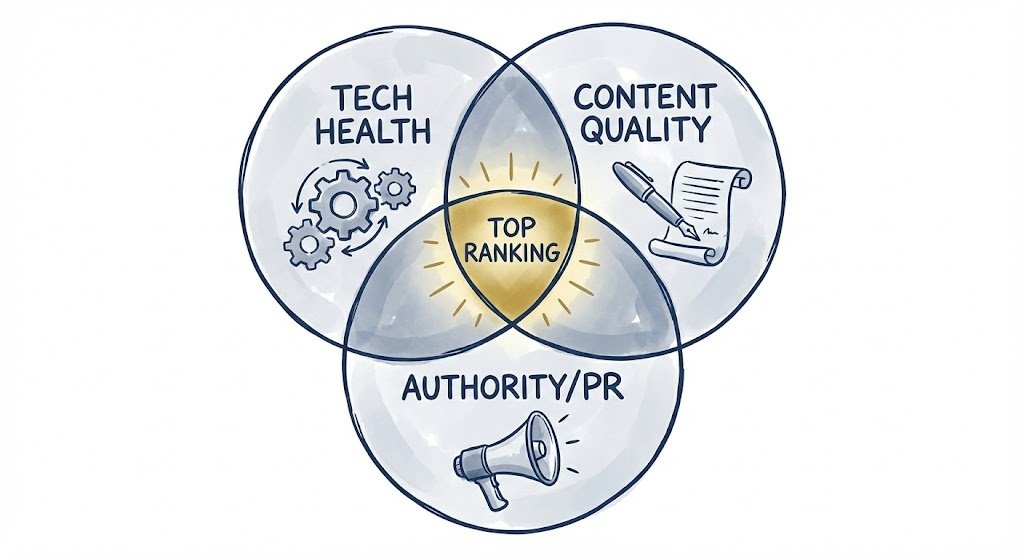
Search Engine Optimization (SEO) is often treated as a solitary task, delegated to a single tech specialist or a third-party plugin. However, as the INGAGE Blog outlines, real organic growth is a cultural habit, not a toggle switch. Effective SEO requires a unified ecosystem where content creators, developers, PR teams, and even customer support work in lockstep to prove your brand’s authority to the algorithms.
The Inherent Friction: “The Silo” Vs. “The Ecosystem”
In most organizations, marketing functions operate in isolation.
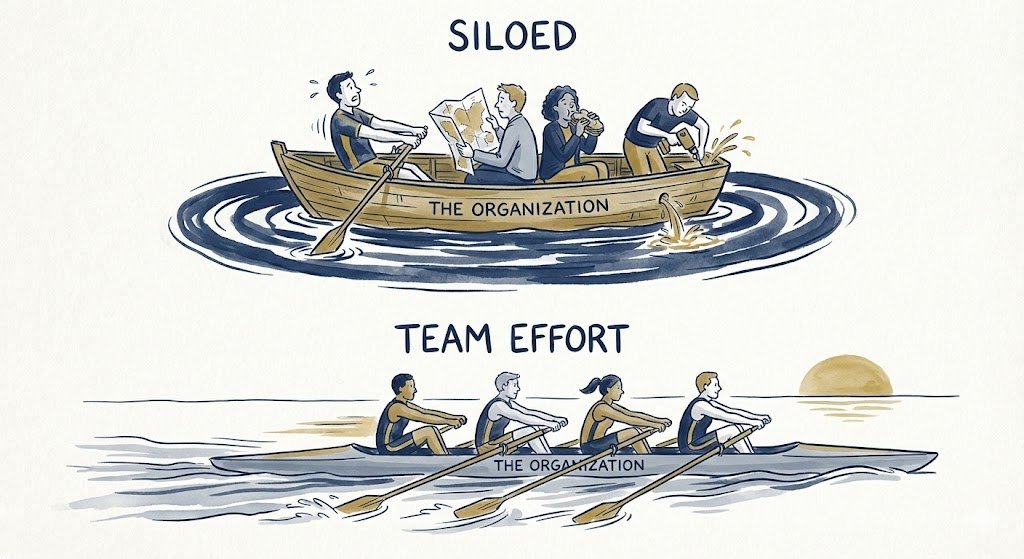
On one side is The Content Team, writing blogs that sound great but lack search intent. On another is The Web Team, building beautiful pages that are too slow to rank. Meanwhile, PR is securing massive media wins but forgetting to ask for the backlink. The friction lies in the fact that Google scores your website as a single entity, but your team is building it as fragmented pieces. In many organizations, SEO sits in a silo, separate from content and dev teams. This fragmentation is costly. As Forbes shared in July of 2025, companies that bridge these operational gaps see significantly higher organic growth and making the platform an even more powerful channel for timely content discovery and SEO visibility.
Why This Disconnect Is Dangerous
The INGAGE team warns that disjointed SEO efforts lead to “The Plateau Effect.”
- Invisible Excellence: You might have the best content in the world (Content Team win), but if your site takes 5 seconds to load (Tech Team fail), Google will bury it on Page 2.
- Wasted Authority: If your PR team lands a feature in Forbes but doesn’t include a link to your key service page, you lose a massive opportunity to pass “domain authority” to your site.
- Missed Signals: Customer Support knows exactly what questions clients are asking. If that data isn’t passed to the Content Team, you miss out on ranking for high-intent “Long Tail” keywords.
The INGAGE Methodology: Integrated Organic Growth
INGAGE argues that SEO is not a department; it is a “Cross-Functional Layer.”
It touches everything. UX/Design ensures the site is crawlable. Social Media drives the traffic signals that validate your content. Email Marketing reduces bounce rates by bringing engaged users back to the site. The methodology is simple: Every department must ask, “How does this action help us rank?”
Comparison: Solo vs. Symphony
Here is how the approach differs when you move from an individual task to a team sport.
| Feature | The “Solo” SEO Specialist | The “Team Effort” Approach |
| Primary Driver | Keywords & Meta Tags | User Experience & Authority |
| Content Creation | Written for bots | Written for humans, optimized for bots |
| PR Role | Ignored / Separate | Source of high-quality backlinks |
| Tech/Dev Role | Fixes bugs when asked | Proactively optimizes speed & structure |
| Result | Short-term spikes | Long-term, compounding growth |
3 Steps To Unite Your SEO Strategy
Based on the insights from the article, here is how to break down the silos.
1. The “Keyword Handoff”
Don’t let the SEO specialist hoard the data.
- Action: Share your high-value keyword list with the PR Team (so they use them in press releases) and the Social Team (so they use them in captions). Consistency across channels teaches Google that you are the authority on those terms.
2. The UX “Health Check”
Designers often prioritize aesthetics over performance.
- Action: Have your SEO and Design teams sit together before a site update. Ensure that “mobile responsiveness” and “load speed” are treated as design features, not just technical constraints.
3. Mine the Front Lines
Your sales and support teams are sitting on a goldmine of SEO content.
- Action: Create a feedback loop where Customer Support sends a weekly list of “Most Asked Questions” to the Content Team. Answering these specific questions in blog posts is the fastest way to capture high-intent search traffic.
Frequently Asked Questions (FAQ)
Do developers really need to know SEO?
Yes. A developer doesn’t need to be a keyword expert, but they must understand “Technical SEO.” This includes site architecture, schema markup, and Core Web Vitals. If the code is messy, the content is invisible.
How does Social Media impact SEO?
While social likes don’t directly count as a Google ranking factor, social media increases visibility. The more people see and share your content, the higher the likelihood that someone will link to it from a website, which is a major ranking factor.
Why is PR mentioned in an SEO strategy?
PR is the primary driver of “Domain Authority.” When a high-trust site (like a news outlet or industry journal) links to your site, it acts as a “vote of confidence” that tells Google your site is trustworthy. You cannot rank competitively without this off-page authority.
Can email marketing help my rankings?
Indirectly, yes. Email drives qualified traffic to your new content. When users click through and spend time reading (Dwell Time), it signals to Google that the page is valuable, which can improve its organic ranking over time.
Is your team rowing in the same direction?
Contact the INGAGE team today to build a comprehensive digital strategy where every department contributes to your organic growth.
If you’re looking for the right SEO team that offers a full range of marketing services, connect with us.