
Quick Summary:
“Everyone” is not a target market. As the INGAGE Blog outlines, many law firms waste their marketing budget by casting a net so wide it catches nothing but noise. The solution is the Client Avatar—a semi-fictional profile of your ideal client that goes beyond basic demographics (age/income) to include psychographics (fears/motivations). By defining exactly who you serve and what keeps them up at night, you shift your marketing from “talking about yourself” to “talking to them.”
The Inherent Friction: “The Megaphone” Vs. “The Conversation”
Law firms often default to broadcasting their accolades rather than addressing client needs.
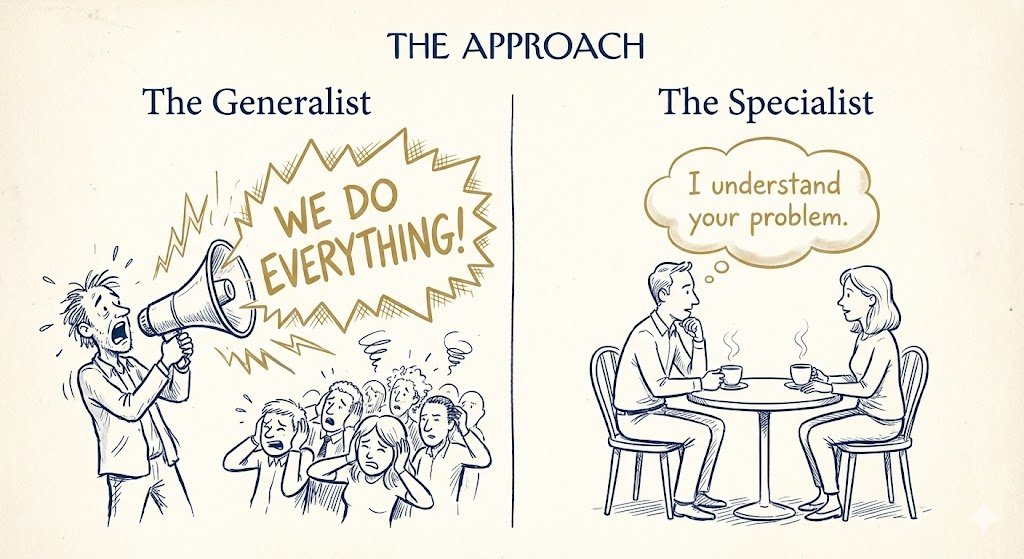
On one side is The Megaphone Firm. Their website is a wall of “We won this award” and “We handle everything.” It is noisy and self-centered. On the other side is The Conversational Firm. Their marketing speaks directly to a specific person’s pain—e.g., “Are you a business owner losing sleep over a contract dispute?” The friction lies in the fear of exclusion; firms worry that by narrowing their focus to a specific avatar, they will lose business. In reality, the opposite is true: specificity sells.
Why This Disconnect Is Dangerous
INGAGE warns that failing to define an avatar leads to “Vanilla Marketing”—bland, forgettable, and expensive.
The “Me-Centric” Trap: If you don’t know who your client is, you end up talking about yourself. Clients don’t care about your awards; they care about their problems.
Wasted Ad Spend: Without an avatar, you pay to show ads to people who can’t afford you or don’t need you. Knowing your avatar’s “Affordability” bracket ensures your budget targets high-value prospects.
Generic Messaging: A message written for a “20-year-old student” and a “60-year-old CEO” will resonate with neither. Distinct avatars allow for distinct, high-impact messaging.
The INGAGE Methodology: The Avatar Anatomy
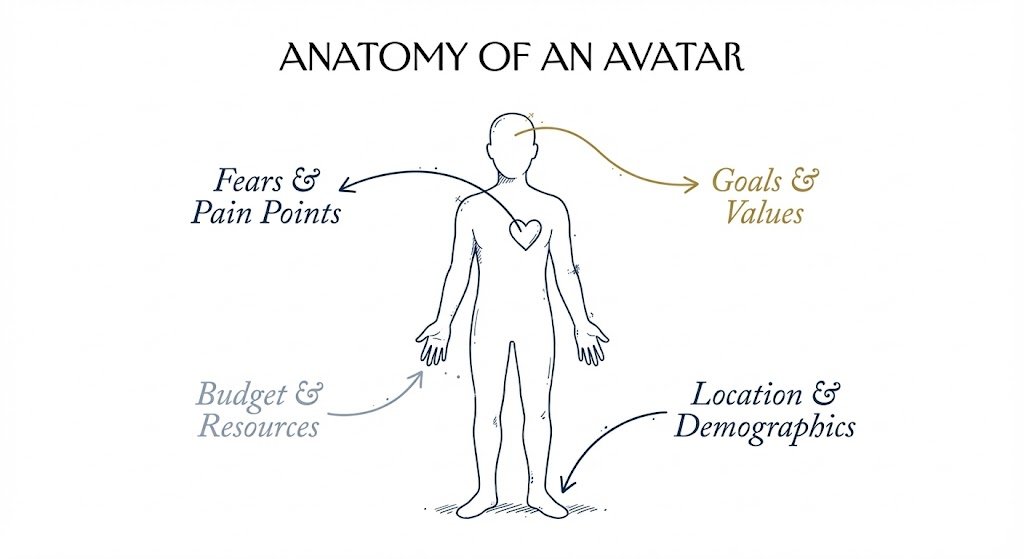
The INGAGE approach breaks the avatar down into three layers: The Problem, The Person, and The Place.
This methodology moves beyond simple data. It asks: What is the emotional burden this client is carrying? (Psychographics). Where do they live and work? (Location/Context). By triangulating these factors, you create a marketing strategy that feels like a personal recommendation rather than a cold ad.
Comparison: Demographics vs. Psychographics
Here is why knowing “age and gender” isn’t enough.
| Feature | Demographics (The Basics) | Psychographics (The Gold) |
| Data Points | Age, Income, Zip Code | Fears, Values, Motivations |
| Example | “Male, 45, Miami” | “Anxious business owner protecting assets” |
| Marketing Use | Ad Targeting | Ad Copy & Emotional Hook |
| Outcome | Reaches the device | Reaches the heart |
3 Steps To Build Your Avatar
Based on the guide, here is how to draft your ideal client profile.
1. Identify the “Bleeding Neck” Problem
What is the urgent issue they need to solve?
Action: specific pain points. Instead of “Family Law,” define the problem as “Navigating a high-conflict divorce without destroying the family assets.” This attracts clients looking for solutions, not just services.
2. Mine Your Testimonials
Your best clients have already told you who they are.
Action: Read your 5-star reviews. What words do they use? Do they praise your “aggression” or your “empathy”? If they love your empathy, your avatar is likely someone feeling vulnerable and seeking protection, not a corporate shark seeking a fight.
3. Map the “Affordability” Zone
Don’t market Ferrari services to a Honda budget.
Action: Be honest about who can afford you. If you are a premium firm, your avatar isn’t just “anyone with an injury”; it’s “someone with significant assets or high-value claims.” This refines where you advertise (e.g., LinkedIn vs. Bus Benches).
Frequently Asked Questions (FAQ)
Can I have more than one avatar?
Yes. most firms have 2-3 distinct avatars (e.g., “The Anxious Spouse” for family law and “The Strategic CEO” for business law). However, you should create separate marketing campaigns for each. Do not mix them.
Does defining an avatar mean I turn away other business?
No. It just means you don’t spend money targeting them. If a client outside your avatar calls you and is a good fit, you take them. The avatar is for outbound focus, not inbound rejection.
How often should I update my avatar?
At least once a year. As the economy changes, your clients’ fears and budgets change. A “Business Owner” avatar in 2020 (focused on survival) is very different from one in 2025 (focused on growth or regulation).
What is the biggest mistake in creating an avatar?
Making it up. Don’t guess. Use real data from your CRM and past case files. If you think your client is a young tech founder but your billing data shows they are actually retired boomers, your marketing will fail.
Are you talking to everyone or the right one?
Contact the INGAGE team today to define your avatar and stop wasting budget on the wrong audience.
About the Author
Isabella Pru has 5+ years of experience and serves as an Account Coordinator at Ingage. She speaks English and Spanish. Learn more about Isabella.