
Quick Summary:
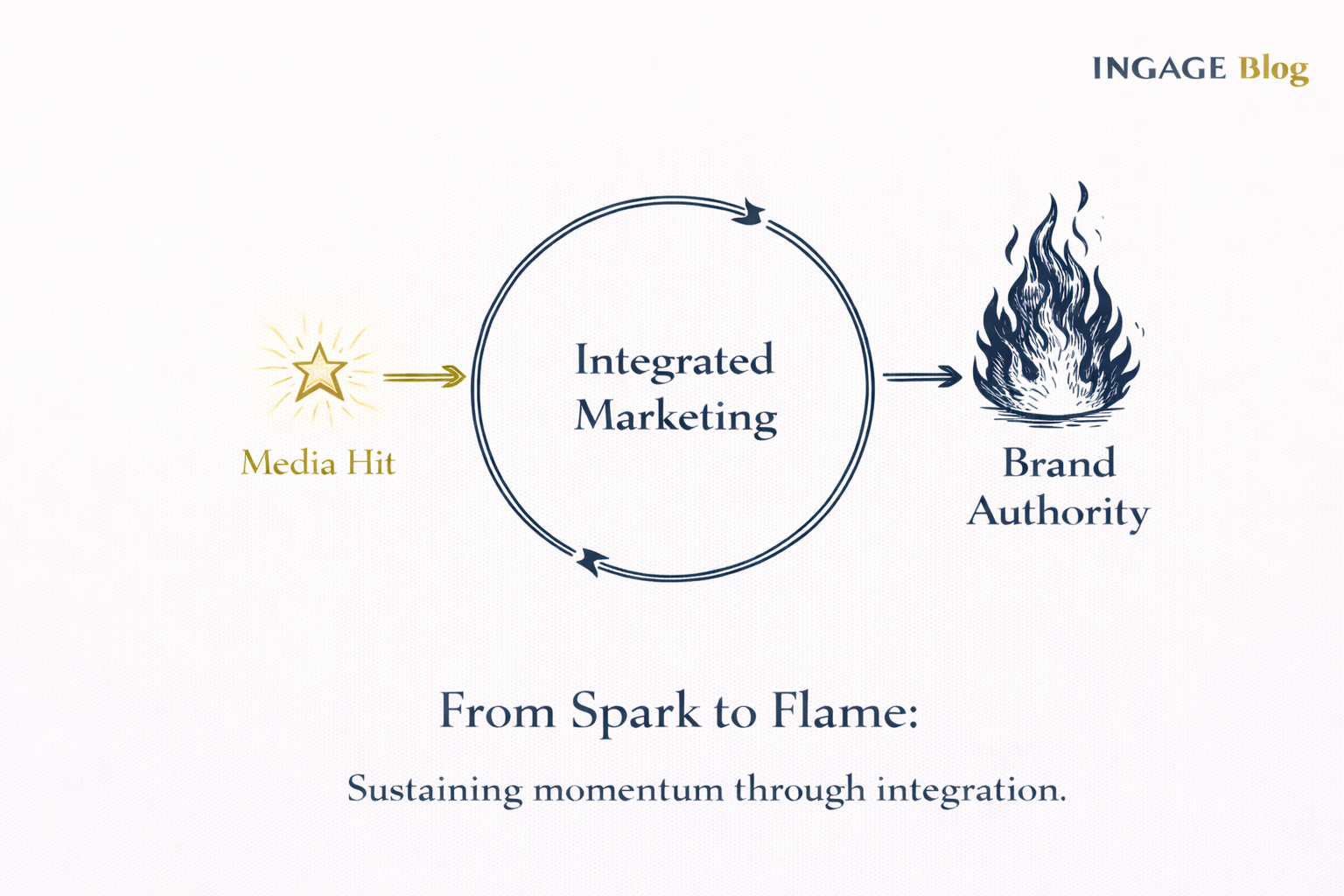
Securing a major media hit is a victory, but it isn’t the finish line. As the INGAGE Blog explains, the true value of PR lies in what happens after the story goes live. Without a strategic “amplification” plan, a media moment is just a flash in the pan. By integrating that coverage into your social, email, and content channels, you transform a single news cycle into months of sustained authority and lead generation.
The Inherent Friction: “The Big Win” Vs. “The Missed Opportunity”
Most businesses treat a media feature as an endgame rather than an asset.
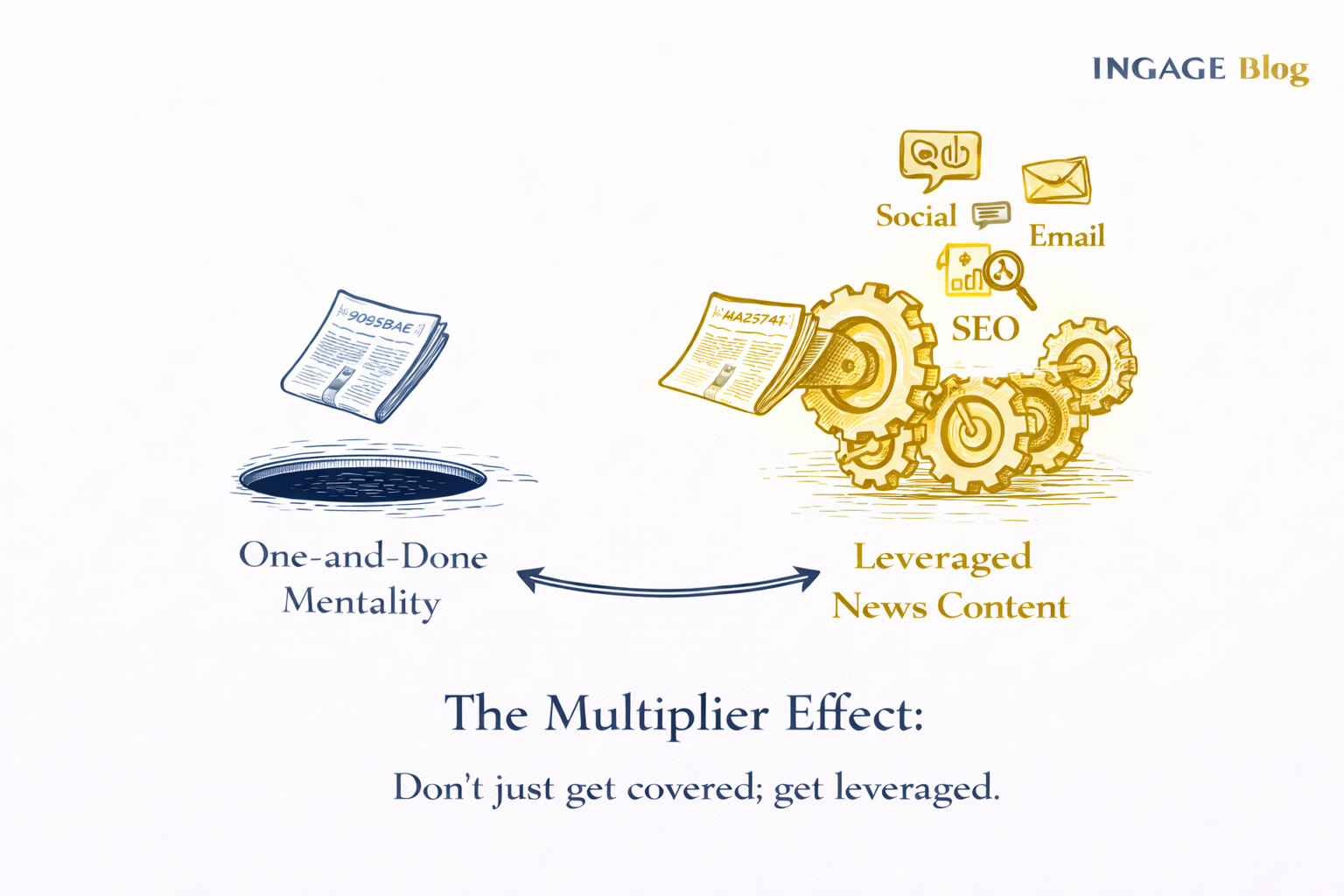
On one side is The PR High. You’ve been quoted in the Miami Herald or interviewed on TV. The ego is fed, and the link is shared once. On the other side is The ROI Reality. A news story has a shelf life of about 24 hours before it’s buried. The friction lies in the “Momentum Gap”: companies that celebrate and move on lose 90% of the potential value. An integrated team knows that the publication is just the raw material used to build a larger reputation engine.
Why This Disconnect Is Dangerous
INGAGE warns that “post-coverage silence” is a waste of your marketing budget.
The Authority Vacuum: If a prospect Googles you two weeks after your media hit and doesn’t see it on your website or social media, the credibility of that moment is lost. People assume if you don’t talk about it, it wasn’t a big deal.
The Fragmented Brand: When PR and Digital teams don’t talk, the “Big Win” stays in a silo. Your social followers never see it, your email list never hears about it, and your website remains a static brochure instead of a dynamic authority hub.
The Short-Lived Lead: Media traffic spikes and then dies. Without “retargeting” or follow-up content that captures that interest, you’ve paid for a spotlight that you left before the audience arrived.
The INGAGE Methodology: The “Echo Chamber” Strategy
The INGAGE approach focuses on “Content Atomization.”
This methodology argues that one media hit should be broken down into at least five distinct assets. A quote becomes an Instagram Graphic. A key insight becomes a LinkedIn Poll. The full story becomes a Blog Recap. By distributing these “atoms” over several weeks, you create an “Echo Chamber” where your audience perceives you as being “everywhere.” This integrated coordination ensures your PR and Digital teams are working as a unified front.
Comparison: Passive Coverage vs. Active Amplification
Here is the difference between a firm that gets lucky and a firm that stays ahead.
| Feature | Passive Coverage (The Amateur) | Active Amplification (The INGAGE Way) |
| Social Media | Posted once with a link | 5+ posts (Quotes, Graphics, Videos) |
| Email Marketing | Not mentioned | Featured in “In the News” segment |
| Website | Nothing changes | Featured in “Media” section & Blog |
| Internal Culture | “Did you see the news?” | Email blast to all staff & partners |
| Follow-up | Silence | Pitching a “Part 2” to the journalist |
3 Steps To Maximize Your Media Moment
Based on the INGAGE strategy, here is your post-publication blueprint.
1. Refract the Story
One link is not enough.
Action: Break the article down. Extract the best quote for a Pull-Quote Graphic. Record a 60-second “Behind the Scenes” video discussing the interview. This makes the coverage digestible for different audiences who might not have time to read a full article.
2. Validate with Your Stakeholders
Trust is built through transparency.
Action: Send a “Thought Leadership” email to your current clients and referral partners. Don’t just say “Look at us”; frame it as “We were asked to weigh in on [Topic] because it impacts you.” This reinforces that they chose the right firm.
3. Review and Pivot
Data dictates the next move.
Action: Check your analytics. Which quotes got the most clicks? Which social platform resonated most with the news? Use this data to pitch the next story. If people loved your take on “Condo Law,” that’s your signal to own that niche in future media outreach.
Frequently Asked Questions (FAQ)
What is the biggest mistake companies make after getting media coverage?
The “Post-and-Forget” habit. Most companies share the link once on LinkedIn and never mention it again. A strategic team shares it multiple times across multiple formats to ensure maximum reach.
How can media coverage help my SEO?
A media hit from a reputable source provides a high-quality “backlink” to your site. When you then write a blog post recapping that coverage and link back to the news outlet, it signals to Google that you are a trusted authority, boosting your overall ranking.
Should I share media coverage with my employees?
Absolutely. It boosts morale and ensures everyone is “on message.” When your team sees the firm being recognized externally, they become more effective brand ambassadors in their own networks.
How do I turn one media hit into another one?
Don’t let the relationship with the journalist end. After the story runs, send a “Thank You” and suggest a follow-up angle for next month. Media monitoring allows you to see if the story was syndicated elsewhere, giving you more outlets to reach out to.
Is your big win gathering dust or driving growth?
Contact the INGAGE team today to build an integrated strategy that ensures your media moments have a lasting impact.
If you’d like to do more and secure more media hits, let’s talk.