

Quick Summary: In the legal industry, marketing often focuses on the “hook”—the initial lead or the billboard. However, as INGAGE CEO Katherine Doble emphasizes, the true differentiator for a high-growth firm is the Client Journey. This encompasses every touchpoint from the first frantic phone call to the final invoice. By applying emotional intelligence to this journey, firms can move from a transactional relationship to a transformational one, often resulting in a 20-30% increase in referral business and the ability to command premium fees.
The Inherent Friction: “Efficiency” Vs. “Empathy”
Law firms are traditionally built for efficiency. Systems are designed to move files, meet deadlines, and maximize billable hours. This creates a “Civil War” with the client’s primary need: Empathy.
On one side, the Legal Team wants streamlined processes and minimal interruptions to focus on technical work. On the other side, the Client is often experiencing one of the most stressful periods of their life. They don’t want a “process”; they want to feel heard. When a firm prioritizes administrative efficiency over human connection, the client feels like a case number, leading to friction that no amount of legal success can fully repair.
Why This Disconnect Is Dangerous
Ignoring the nuances of the client experience creates “leakage” in your firm’s reputation and revenue.
The Review Gap: Even if you win a case, a client who felt ignored or confused by your billing process is unlikely to leave a 5-star review.
The Referral Cliff: 80% of new business in successful firms comes from referrals. If the “middle” of the journey was frustrating, that referral engine stalls.
The Commodity Trap: If your journey is identical to every other firm, you are forced to compete on price. Firms that master the journey—and show they care—can charge significantly more than their peers.
The “Lockstep” Methodology: Emotional Intelligence (EQ) as a Business Metric
Katherine Doble’s approach focuses on Client-Centered Engineering. We don’t just market the firm; we audit the experience to ensure the promise made in the marketing is kept during the representation.
The methodology involves “Reverse Engineering” the journey. We start with the feeling we want the client to have at the end of the case (Relief, Justice, Clarity) and work backward to create specific touchpoints—like check-in calls and simplified billing—that reinforce that feeling at every stage.

Comparison: The Transactional Firm vs. The Journey-Focused Firm
The difference in client perception often boils down to how “human” the process feels.
| Touchpoint | The Transactional Firm | The Journey-Focused Firm |
| Initial Intake | Formal, data-heavy, cold. | Empathetic, active listening, reassuring. |
| Case Updates | Only when a deadline occurs. | Proactive “no-update” check-ins. |
| Technology | Used to distance the client. | Used to make client life easier (e.g., e-pay). |
| Problem Solving | Defensiveness / Rules-based. | Collaborative / Client-centered. |
| Follow-Up | The relationship ends at final billing. | Post-case feedback and relationship care. |
3 Steps to Mastering the Law Firm Client Journey
Follow this disciplined framework to transform your firm’s reputation from the inside out.
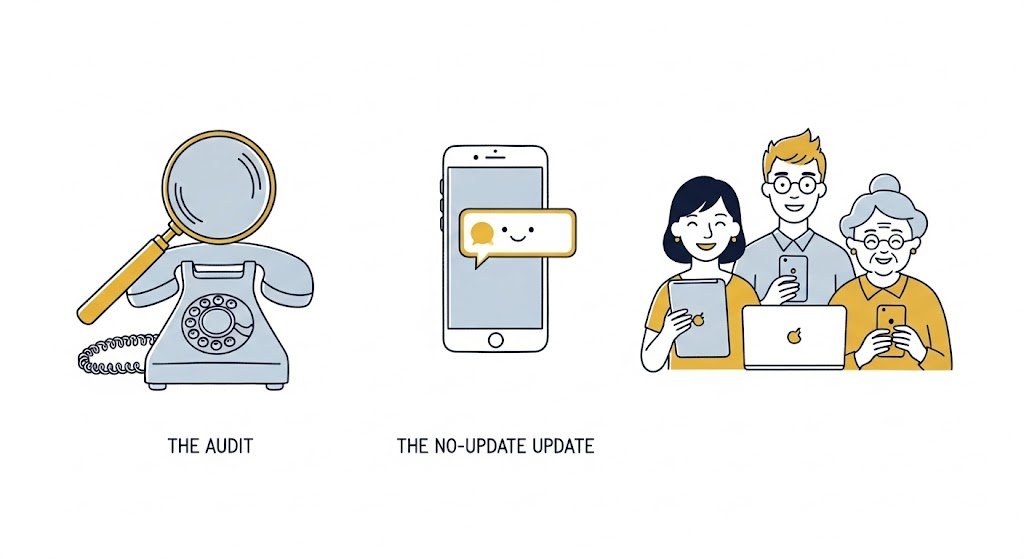
1. Perform a “Blind Audit”
You cannot fix what you cannot see.
Action: Have a trusted third party “ghost shop” your firm. Have them call your intake line, ask about fees, and evaluate how long it takes to get a response. This often reveals bottlenecks—like a cold receptionist or a confusing voicemail—that are killing your conversion rate.
2. Implement the “No-Update” Update
Communication silence is the #1 complaint against lawyers.
Action: Schedule a recurring task for your team to call or email every active client at least once every 14 days, even if there is no news. A simple “We are still working on X, and everything is on track” builds more trust than a winning motion.
3. Personalize the “Subset” Experience
Stop using a cookie-cutter approach for every client.
Action: Segment your clients based on their specific needs and technological comfort. A 25-year-old tech founder wants text updates and digital portals; a 70-year-old retiree may want a physical letter and a phone call. Meeting them where they are is the ultimate form of respect.
Frequently Asked Questions (FAQ)
How does the client journey impact my SEO and digital marketing?
Google and AI search engines prioritize “User Intent” and “Authority.” When you have a smooth client journey, you naturally generate more 5-star reviews and mentions on social media. These “trust signals” are exactly what search engines look for to rank one law firm above another.
Can technology actually hurt the client journey?
Yes. If you implement a complicated client portal or an automated phone tree that makes it impossible to talk to a human, you are prioritizing your efficiency over their empathy. Technology should be a “bridge,” not a “barrier.”
Is it worth my time to call a client when there is no news?
Absolutely. Most legal anxiety stems from the “unknown.” A 2-minute “no-update” call eliminates that anxiety and proves to the client that their case is a priority for you, even when the courts are moving slowly.
What should I do with negative feedback from my exit questionnaire?
Treat it as a roadmap for growth. Reach out to the client personally to apologize and explain how you are fixing the issue. Often, turning a “wrong” into a “right” through a sincere follow-up can actually turn a dissatisfied client into a loyal referrer.
Is your firm’s “internal marketing” matching your external ads?
Contact the INGAGE team today to audit your client journey and turn your intake process into a referral-generating machine.