
Quick Summary:
The landscape of Florida politics and business is evolving at breakneck speed. To navigate it, Helen explains why modern advocacy requires a new approach and why organizations can no longer afford to sit on the sidelines of policy discussions and how true influence is built not on lobbying, but on community trust.
The Inherent Friction: “Public Perception” Vs. “Policy Reality”
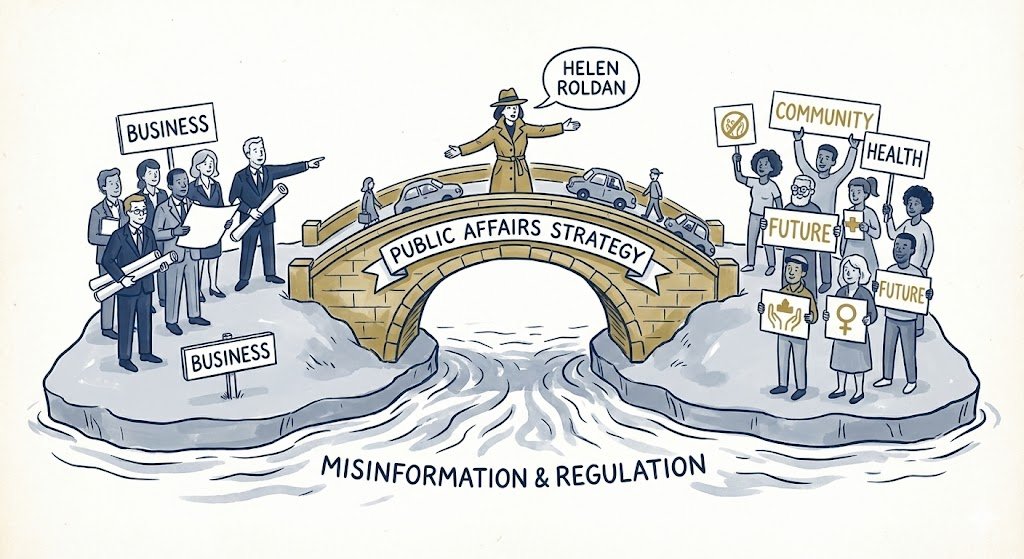
Organizations often find themselves trapped between what they want to build or achieve and what the community understands about their goals.
On one side is The Organization’s Vision. Developers, non-profits, and businesses often have data-backed plans that make perfect sense on paper. On the other side is The Public’s Sentiment. Without proper translation, even beneficial projects can be killed by fear, misinformation, or a lack of trust from local stakeholders. The friction lies in the gap between the intent of the policy or project and the impact perceived by the community.
Why This Disconnect Is Dangerous
Helen Roldan warns that ignoring the “Public” in Public Affairs leads to stalled progress and reputational damage.
- The “Silent Risk”: If you wait until a bill is proposed or a zoning hearing is scheduled to engage, you are already too late. Decisions are made long before the vote.
- The “Echo Chamber”: Businesses often talk only to themselves. Without a cross-sector perspective (understanding government, non-profit, and private needs), your message will fall flat with decision-makers who are balancing competing interests.
- The Trust Deficit: You cannot “buy” support with ads. Trust is earned through listening. If a community feels ignored, no amount of marketing will save the project.
The INGAGE Methodology: Connection Over Transaction
True advocacy is not about broadcasting a message; it is about building a bridge. This philosophy is the cornerstone of INGAGE’s formal Public Affairs Division, spearheaded by Helen Roldan, Senior Director of Public Affairs. Drawing on her research at FIU’s Jorge M. Pérez Metropolitan Center and the leadership principles that earned her a spot on the University of Florida’s “40 Gators Under 40,” Helen has developed a framework where community input drives policy, rather than the other way around. Helen’s approach to the new division is rooted in “Cross-Sector Empathy.”
Having worked in government, non-profits, and the private sector, Helen argues that effective Public Affairs isn’t just about “lobbying” (a transactional exchange). It is about “Storytelling with Data.” By using research to ground narratives in reality—like the work done at FIU’s Metropolitan Center on housing—INGAGE helps clients position their goals as solutions to public problems, rather than just private profits.
Comparison: PR vs. Public Affairs
Many leaders confuse the two. Here is how Helen Roldan defines the difference.
| Feature | Traditional Public Relations (PR) | Strategic Public Affairs (INGAGE) |
| Primary Goal | Media Visibility & Brand Awareness | Policy Influence & Public Sentiment |
| Target Audience | Consumers & Potential Clients | Legislators, Regulators & Communities |
| Key Tactic | Press Releases & Interviews | Grassroots Advocacy & Stakeholder Engagement |
| Time Horizon | Short-term (Campaign based) | Long-term (Legislative cycles) |
| Outcome | “They know who we are.” | “They support what we do.” |
3 Steps To Build Political Capital
Based on Helen’s insights, here is how organizations can start shaping their environment rather than just reacting to it.
1. Simplify the Narrative
Policy is complex; your story shouldn’t be.
- Action: specific messaging is critical. Turn complex zoning or regulatory issues into human stories. Don’t talk about “Unit Density”; talk about “Homes for Teachers and Nurses.”
2. Show Up Before You Want Something
Trust is a bank account; you have to make deposits before you can make a withdrawal.
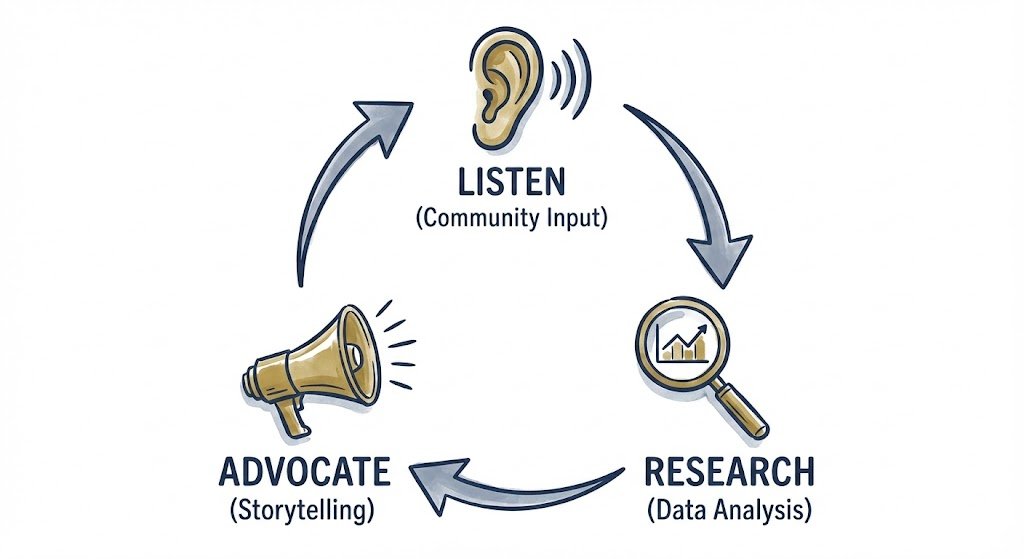
- Action: Engage with local leaders and community groups now, not when you need a permit. Listen to their concerns about housing, water, or infrastructure so your future proposals address their actual needs.
3. Leverage Data as a Shield
Opinions are easy to argue with; data is harder.
- Action: Use rigorous policy research to back your claims. As Helen notes, grounding your storytelling in reality (like housing statistics) reveals trends that decision-makers cannot ignore, making your advocacy “bulletproof.”
Frequently Asked Questions (FAQ)
What exactly does a Public Affairs division do?
It manages the intersection of business and government. This includes tracking legislation, mobilizing grassroots support for a cause, managing crisis communications related to regulations, and building relationships with elected officials.
How is this different from lobbying?
Lobbying is one tool in the Public Affairs toolbox, focused specifically on legislators. Public Affairs is broader—it involves shaping public opinion (the voters) to create an environment where the legislators feel safe supporting your cause.
Why is Florida a unique landscape for Public Affairs?
Florida is undergoing massive transformation in infrastructure, housing, and governance. State-level preemption laws are shifting power away from cities, meaning businesses need a strategy that works in both Tallahassee (State) and City Hall (Local).
When should a business hire a Public Affairs firm?
Ideally, before a crisis hits. If your industry is heavily regulated (like real estate, healthcare, or energy) or if your business model depends on government contracts or permits, you need a Public Affairs strategy actively running in the background at all times.
Is your organization ready to shape the conversation?
Contact Helen Roldan and the INGAGE team today to build a Public Affairs strategy that turns policy challenges into growth opportunities.
Connect with us to learn how INGAGE can support and build your own public affairs and communications strategy: https://www.ingage.biz/contactus