
Quick Summary: With billions of active users across Meta platforms, the question for law firms is no longer if they should advertise on social media, but how to do so without compromising professional ethics. Successful social media advertising for the legal sector requires a sophisticated “Lockstep” approach that marries high-performance targeting with the rigid standards of State Bar regulations. By shifting from “billboard-style” shouting to value-driven education, firms can turn social feeds into powerful engines for client acquisition
The Inherent Friction: Aggressive Growth vs. Ethical Compliance
In legal marketing, a “civil war” often exists between the drive for digital leads and the constraints of professional conduct rules.
On one side, Marketing Agencies often push for aggressive, high-converting tactics like flashy clickbait or unsubstantiated claims to drive volume. On the other side, State Bar Ethics Committees maintain strict rules against “misleading” advertisements or improper solicitations. The friction lies in the execution: how can a law firm stand out in a crowded Instagram feed while remaining “classic, innovative, and effortlessly elegant” as per the INGAGE philosophy?
Why This Disconnect Is Dangerous
Failing to align social media strategy with legal ethics creates risks that far outweigh any potential lead volume:
Disciplinary Action: Violating State Bar rules can lead to public reprimands, fines, or even license suspension, turning a marketing investment into a professional disaster.
Brand Dilution: “Low-quality” or overly aggressive ads can alienate high-value clients who perceive the firm as “ambulance chasing” rather than a sophisticated legal partner.
Wasted Ad Spend: Without proper targeting (Lookalikes, Custom Audiences), firms often pay to show ads to people who will never need their services, leading to a high Cost-Per-Acquisition (CPA).
The INGAGE “Education-First” Methodology
INGAGE approaches social ads not as sales pitches, but as Strategic Education. Katherine Doble emphasizes that the most successful legal ads on Facebook and Instagram are those that provide immediate value.
By utilizing Adaptive Ad Formats—such as Carousel ads that break down complex legal processes or Video ads that introduce the firm’s philosophy—law firms build trust before the first consultation ever happens. This methodology ensures that when a potential client is ready to hire, the firm is already viewed as the authoritative voice in their feed.
Comparison: The Billboard Approach vs. The Targeted Narrative
Modern social advertising is about precision, not volume.
| Feature | The Old Way (Billboard Style) | The INGAGE Way (Targeted Narrative) |
| Platform | Static Display / General Posting | Meta (FB/IG) with Behavioral Targeting |
| Content | “Call Us Today!” (Generic) | Educational Content / Client Success Stories |
| Audience | Everyone (Broad & Inefficient) | Custom & Lookalike Audiences |
| Goal | Clicks at any cost | Building trust & lead quality |
| Compliance | Often an afterthought | Compliance-first creative process |
.
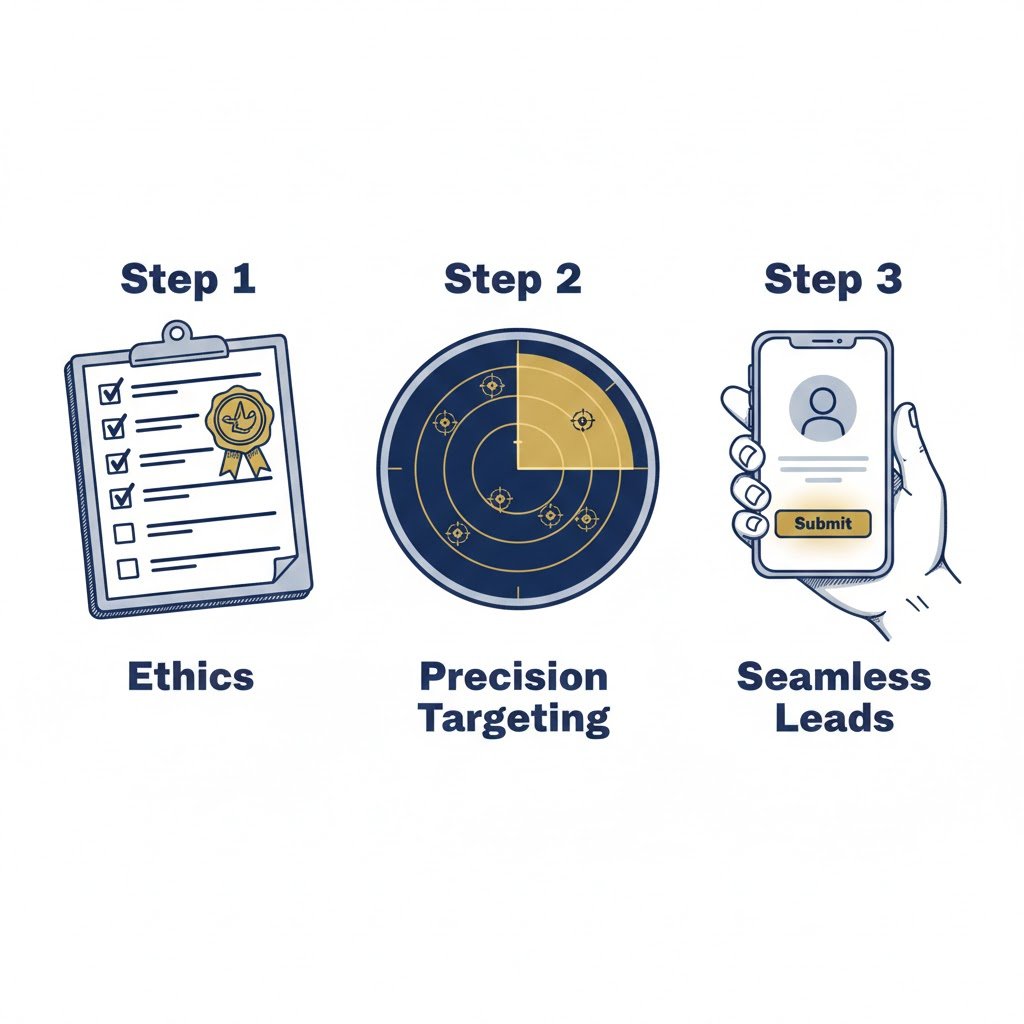
3 Steps to Launching an Ethical Social Ad Campaign
To succeed on Meta, law firms must move beyond simple “boosted posts” and implement a structured strategy.
1. The Ethical Guardrail Audit
Before a single dollar is spent, the creative must be vetted against the specific State Bar rules where the firm practices.
Action: Establish a “Compliance Checklist” for all ad copy. Ensure it avoids prohibited words (e.g., “Specialist” or “Expert” unless certified) and includes all necessary disclaimers without ruining the design.
2. Implementing “Lookalike” Precision
Social advertising is only as good as the data behind it.
Action: Upload a “Custom Audience” of your best past clients (anonymized/hashed) to allow Meta to find “Lookalike Audiences.” This ensures your gold-standard content is reaching people with similar legal needs.
3. Frictionless Lead Generation
Don’t make potential clients work to find you.
Action: Use Lead-Generation Ads that incorporate forms directly within the Facebook or Instagram app. This reduces friction and allows the firm to collect essential information (name, email, case type) instantly, while the user’s intent is highest.
Frequently Asked Questions (FAQ)
Is it legal for law firms to advertise on Facebook and Instagram?
Yes, but it is highly regulated. Most State Bars allow social media advertising as long as the content is not misleading, does not promise specific outcomes, and adheres to strict disclosure requirements regarding “Attorney Advertising.”
Which is better for law firms: Facebook or Instagram?
It depends on the practice area. Facebook is generally superior for reaching a broader, slightly older demographic (e.g., Estate Planning, Family Law). Instagram is highly effective for visual-heavy practices or reaching younger demographics (e.g., Personal Injury, Criminal Defense).
What is a “Lookalike Audience” in legal marketing?
A Lookalike Audience is a targeting tool that identifies people who share similar characteristics with your existing clients. By providing Meta with a list of your successful past leads, the algorithm finds other users who are likely to need similar legal services.
How do you measure the success of a law firm’s social ads?
Success should be measured by Lead Quality and Cost-Per-Acquisition (CPA), not just likes or clicks. A successful campaign is one that generates qualified consultations that eventually convert into retained cases.
Is your firm ready to unlock the potential of social advertising?
Contact the INGAGE team today to build a high-performance, ethics-first social media strategy that puts your firm in front of the clients who need you most.