

Quick Summary: The “Great Resignation” transformed the legal labor market from an employer-driven environment to a talent-driven one. For law firms, the challenge isn’t just about finding warm bodies to bill hours; it’s about overcoming the Attrition Trap. The “Lockstep” solution focuses on the Employee Value Proposition (EVP)—moving beyond “throwing money at the problem” to creating a culture of flexibility, purpose, and clear career pathing that turns a law firm into a “Destination Employer.”
The Inherent Friction: “Traditional Rigor” Vs. “Modern Flexibility”
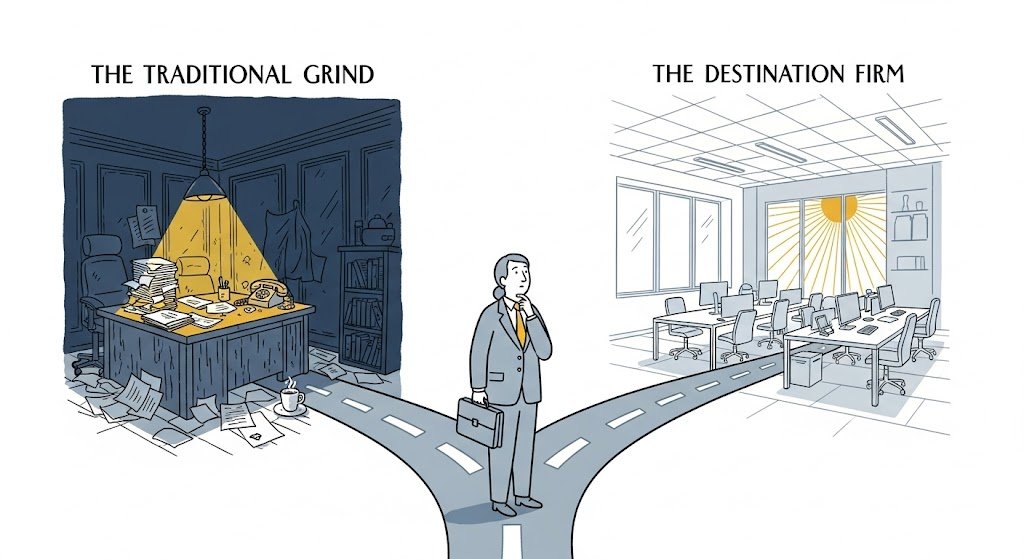
Law firms have long prided themselves on “The Grind”—a culture of high billable hour requirements, 24/7 availability, and physical presence in the office as a measure of loyalty. This creates a “Civil War” with the post-pandemic mindset of the modern lawyer.
The Old Guard views remote work and flexible schedules as a threat to mentorship and productivity. The Modern Talent, however, views these same factors as non-negotiable requirements for their mental health and longevity. When a firm doubles down on rigid office mandates, they don’t just lose staff; they lose the very high-performers who have the leverage to leave for firms that prioritize human-centric management.
Why This Disconnect Is Dangerous
Firms that fail to bridge this gap face a cycle of “High-Cost Churn” that impacts the bottom line and brand reputation.
The Replacement Tax: It is estimated that replacing a senior associate costs 1.5x to 2x their annual salary when factoring in recruitment fees, lost billable hours, and onboarding time.
The “Toxic Spiral”: When one person leaves, their workload is often dumped on those who stay. This increases burnout among your best remaining people, leading to a “cascade of resignations.”
Brand Erosion: In the age of Glassdoor and social media, a firm’s internal culture is visible to the public. A “burn and turn” reputation makes it significantly harder to attract top-tier talent.
The “Lockstep” Methodology: The Retention-First Framework
Katherine Doble’s approach to talent management is built on Human Capital Marketing. We treat your employees as your most important “internal clients.”
The methodology involves three critical shifts:
From Transactional to Relational: Moving from “I pay you for hours” to “I invest in your career.”
From Rigid to Adaptive: Replacing “One-size-fits-all” rules with individualized flexibility policies.
From Silence to Feedback: Implementing “Continuous Listening” through stay-interviews and quarterly feedback loops to catch grievances before they become resignation letters.
Comparison: Reactive Hiring vs. Proactive Retention
The most successful firms spend more time keeping their current stars than hunting for new ones.
| Strategy Component | The Reactive Firm (High Attrition) | The Proactive Firm (High Retention) |
| Compensation | Standard salary + vague bonuses | Competitive pay + “Total Rewards” |
| Flexibility | “Hybrid” with strict mandates | Outcomes-based / Adaptive flexibility |
| Career Growth | Unclear partnership tracks | Transparent “Career Ladder” |
| Culture | Forced perks (Pizza/Ping-pong) | Authenticity / Well-being / Purpose |
| Communication | Only during annual reviews | Quarterly “Stay-Interviews” |
3 Steps to Winning the Talent War
Based on the INGAGE methodology, follow this disciplined framework to stabilize your team and attract the best in the market.
1. Conduct “Stay-Interviews”
Don’t wait for the exit interview to find out why people are unhappy.
Action: Schedule 15-minute conversations with your top performers today. Ask: “What keeps you here?” and “What would make you consider leaving?” Use this data to fix the specific friction points before they lead to a resignation.
2. Formalize “Adaptive Flexibility”
Flexibility isn’t just about where you work; it’s about how and when.
Action: Create a policy that focuses on results, not hours at a desk. Support “flextime” that allows high-performers to manage their personal lives without guilt. Trust is the ultimate retention tool.
3. Build a Transparent “Career Pathway”
Lawyers leave when they feel stuck.
Action: Delineate exactly what is required to move from Associate to Partner. Provide the mentorship and “upskilling” needed to reach those goals. When an employee sees their 5-year future at your firm, they are less likely to answer a recruiter’s call.

Frequently Asked Questions (FAQ)
Is pay the most important factor in the Great Resignation?
While competitive pay is a “hygiene factor,” it is rarely the reason top talent stays long-term. Research shows that culture, work-life balance, and feeling valued are the primary drivers of retention.
How do we maintain mentorship in a remote/hybrid firm?
Mentorship must be intentional, not “incidental.” Instead of hoping for a hallway chat, schedule “Digital Coffee” sessions and implement formal “Shadowing” opportunities on video calls.
Can a small firm compete with Big Law for talent?
Yes. Smaller firms have the “Agility Advantage.” While Big Law offers higher salaries, small firms can offer more meaningful work, faster paths to leadership, and a level of personalized flexibility that large bureaucracies cannot match.
Is your firm losing its best assets to the competition?
Contact the INGAGE team today to audit your employee experience and build a talent strategy that keeps your top performers exactly where they belong—at your firm.