

Quick Summary:
In the age of social media, a single disgruntled neighbor can derail a multi-million dollar development or a critical government initiative overnight. As the INGAGE Blog outlines, the rise of the “NIMBY” (Not In My Backyard) movement has made Public Affairs an essential survival tool. Unlike lobbying, which happens behind closed doors, Public Affairs happens in the public square. It is the strategic engine that monitors sentiment, educates stakeholders, and mobilizes the “silent majority” to ensure that good projects don’t die because of loud opposition.
The Inherent Friction: “The Project” Vs. “The Pushback”
Government agencies and real estate developers often face a volatile disconnect.
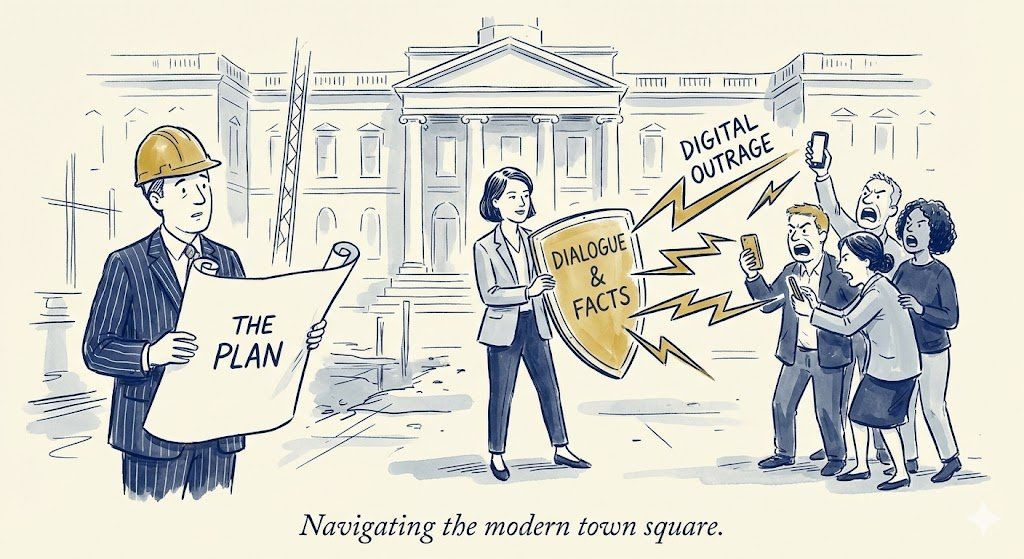
On one side is The Plan. It is often data-backed, legally compliant, and beneficial for economic growth. On the other side is The Panic. Fueled by misinformation or fear of change, local opposition groups can galvanize instantly on digital platforms. The friction lies in the speed of the opposition; while developers play by the rules of long-term permitting, opponents play by the rules of viral outrage.
Why This Disconnect Is Dangerous
INGAGE warns that ignoring the role of Public Affairs leads to “Death by Delay.”
- The NIMBY Effect: Even well-meaning stakeholders can stunt economic growth if they don’t understand the benefits. Without a strategy to turn “Naysayers” into “Supporters,” projects get stuck in zoning purgatory.
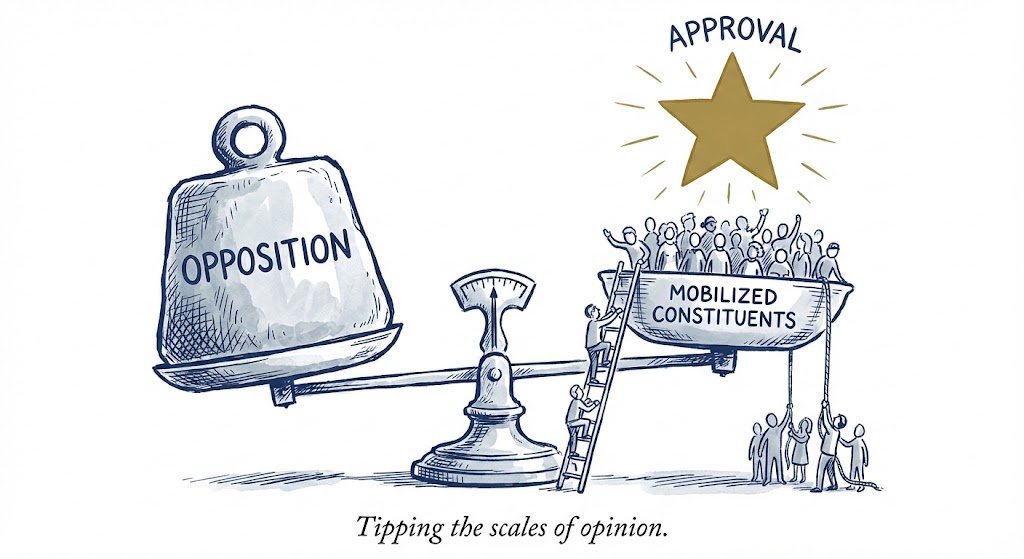
- The “Silent Majority” Problem: Often, the people who support a project (e.g., those needing affordable housing) are quiet, while those who oppose it are loud. If you don’t mobilize the supporters, politicians only hear the anger.
- Erosion of Trust: If a government agency or developer is seen as “hiding” behind regulations rather than engaging with the community, they lose the social license to operate.
The INGAGE Methodology: The “Unbiased Intermediary”
The INGAGE approach positions the Public Affairs firm not just as a mouthpiece, but as a bridge.
This methodology relies on the “Outside Voice” Advantage. As the article notes, an external firm is often more successful than an in-house team because they are perceived as an unbiased intermediary. They can navigate the emotional landscape, negotiate compromises, and translate complex policy into human benefits without the baggage of the corporate brand. It blends high-tech monitoring (AI and data analytics) with high-touch engagement (door knocking and warm conversations).
Comparison: Public Relations vs. Public Affairs
Many confuse the two. Here is how INGAGE defines the critical difference.
| Feature | Public Relations (PR) | Public Affairs (PA) |
| Primary Goal | Shape Brand Reputation | Shape Policy & Land Use |
| Target Audience | Consumers & Media | Legislators, Regulators & Voters |
| Mechanism | Press Releases & Ads | Grassroots Mobilization & Coalitions |
| Conflict Style | Avoidance / Management | Engagement / Negotiation |
| Key Metric | Impressions & Sentiment | Votes & Approvals |
3 Steps To Shape Constituent Advocacy
Based on the insights from the article, here is how to turn opposition into opportunity.
1. Monitor the “Chatter” Before It Becomes a Roar
Don’t wait for the protest.
- Action: Use social listening tools to track online sentiment about your project before you file for permits. Identifying the specific concerns (e.g., traffic vs. shadows) allows you to address them in your initial proposal, disarming the opposition early.
2. Identify and Encourage “Pro-Advocates”
You have allies; find them.
- Action: For every NIMBY, there is a “YIMBY” (Yes In My Backyard)—someone who benefits from the jobs or housing you are creating. Use Public Affairs campaigns to identify these people and give them the tools (talking points, email templates) to contact their elected officials.
3. Balance “High Tech” with “High Touch”
Robots can’t negotiate.
- Action: While data analytics help target the message, the conversion happens in person. Host community meetings, knock on doors, and have the “warm conversations” that build real relationships. Trust is rarely built through a screen.
Frequently Asked Questions (FAQ)
Is Public Affairs the same as Lobbying?
No. Lobbyists speak directly to elected officials to influence their vote. Public Affairs professionals speak to the constituents (the voters) to influence their sentiment, which then influences the elected official. It is a “bottom-up” rather than “top-down” approach.
Why do Real Estate developers need Public Affairs?
Because zoning is political. A developer can have the legal right to build, but if the community rises up, city commissioners often bow to pressure to save their seats. Public Affairs provides the political cover needed for officials to vote “Yes.”
Can an in-house team handle this?
It is difficult. In-house teams are often viewed with suspicion by the community (“They just want their paycheck”). An outside firm brings a level of neutrality and specialized expertise in negotiation that internal teams often lack.
How does Crisis Management fit in?
Public Affairs is your first line of defense. When a crisis hits (e.g., a construction accident or a controversial leak), the relationships you have built with community leaders and the reservoir of goodwill you have established become your safety net.
Is your project ready to face the public?
Contact the INGAGE team today to build a Public Affairs strategy that turns constituents into your strongest advocates.