
Quick Summary:
Operating in regulated sectors or global markets creates a unique paradox: the need for strict compliance often stifles the creativity required for effective PR. As INGAGE CEO Katherine Doble outlines in Medium, the strongest brands don’t choose between “safe” and “engaging.” Instead, they master the art of translation—turning complex regulatory frameworks into clear, human-centric narratives that resonate across diverse cultural landscapes.
The Inherent Friction: “Regulatory Rigidity” Vs. “Global Resonance”
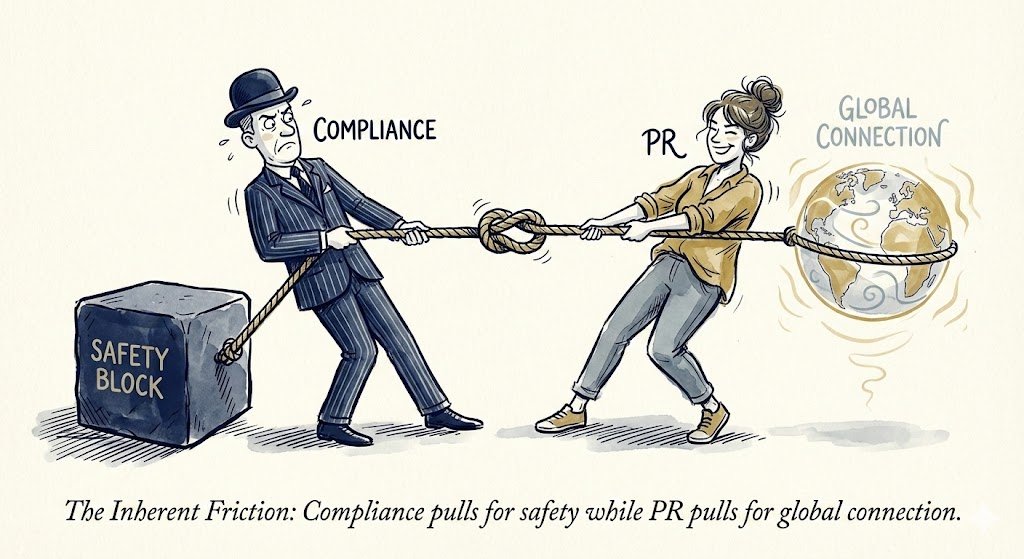
In the high-stakes world of banking, healthcare, law, and international trade, organizations often face a paralyzing standoff between their compliance officers and their communications teams.
On one side, Compliance and Legal Teams are mandated to minimize risk. Their instinct is to strictly adhere to the letter of the law, often resulting in jargon-heavy, sterile messaging that protects the company but alienates the audience. On the other side, PR and Global Marketing Teams are tasked with building connection and trust. They know that to compete in a noisy global market, stories must be emotional, timely, and culturally relevant.
Why This Disconnect Is Dangerous
Katherine Doble, INGAGE CEO and Founder, warns that when these two priorities clash without a unified strategy, the organization suffers from a “Crisis of Translation.”
- If Compliance wins completely: The brand becomes invisible or robotic. Messaging is so diluted by legal approvals that it loses all impact, failing to engage stakeholders or differentiate the company from competitors.
- If Global PR wins completely: The company risks regulatory infractions or cultural tone-deafness. Moving too fast in a regulated market without guardrails can lead to fines, lawsuits, or reputational damage in specific regions.
Katherine Doble’s “Purpose-Driven” Methodology
Drawing on experience in law, real estate, and government, Katherine Doble argues that PR in regulated markets isn’t about avoiding the rules—it’s about mastering them so well that you can improvise within them.
She emphasizes that successful communication in these sectors relies on Rapid Learning and Strategic Translation. The goal is not to dumb down the regulations, but to “translate complex regulations into clear, compelling stories.” This creates a communication framework where accuracy builds trust, and creativity builds momentum.
Comparison: The Priorities of Expansion
Understanding the opposing forces in regulated global markets is the first step to aligning them.
| Feature | Compliance & Regulatory Priorities | Global PR & Marketing Priorities |
| Primary Goal | Adhere to laws and avoid penalties | Build brand affinity and market share |
| Default Stance | “Stick to the script” / Caution | “Disrupt the market” / Innovation |
| Audience | Regulators, Auditors, Government Bodies | Consumers, Media, Local Communities |
| Tone | Technical, Precise, Risk-Averse | Emotional, Human, Accessible |
| Risk Focus | Liability (Legal/Financial fines) | Irrelevance (Being ignored by the market) |
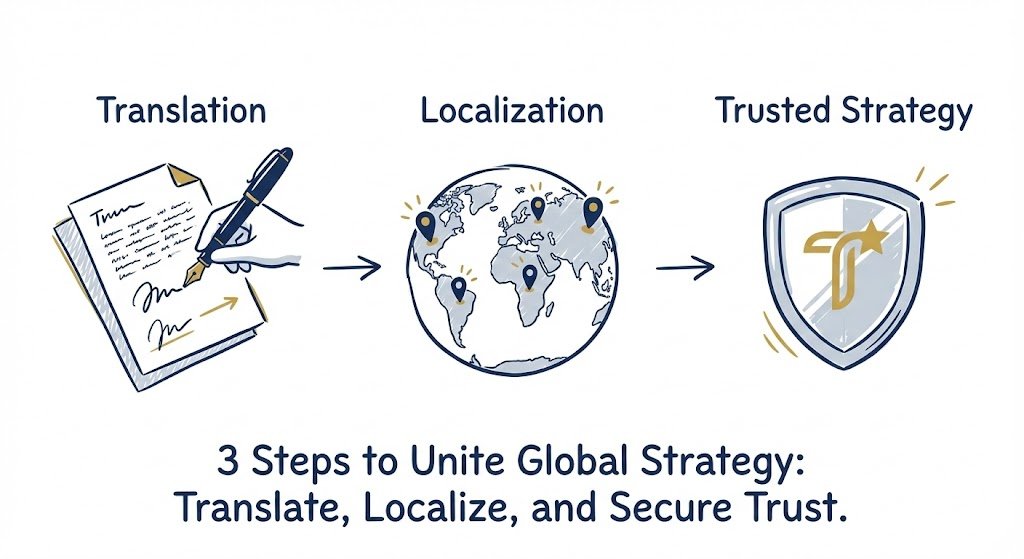
3 Steps To Unite Your Global Strategy
Based on insights shared by Katherine Doble in Medium, here is how organizations can turn regulatory constraints into competitive advantages.
1. The “Translation” Protocol
Before a campaign launches, the team must bridge the gap between technical accuracy and public understanding. Katherine highlights “Strong Writing” as a non-negotiable skill here.
- Action: Do not use legal text as marketing copy. Instead, establish a “Translation Protocol” where subject matter experts explain the intent of the regulation, and PR writers craft the message around that intent, ensuring it is both compliant and compelling.
2. Localize, Don’t Just Translate
A regulated message in the US might not land the same way in the EU or Asia. Katherine notes the importance of “Authenticity” across diverse audiences.
- Action: Use “Test Markets” (like the diverse ecosystem of Miami) to gauge how different cultural segments react to compliance-heavy messaging. Adapt the delivery of the message to fit local cultural norms without altering the core regulatory facts.
3. Consistency Through Rapid Learning
In regulated industries, the rules change often. A static PR strategy will fail. The INGAGE approach relies on “Rapid Learning” to stay ahead of market shifts.
- Action: Create a feedback loop where regulatory updates are immediately briefed to the PR team. This ensures that your “Safe” messaging is always up-to-date, allowing the PR team to move with speed rather than waiting for lengthy reviews every time the wind changes.
Frequently Asked Questions (FAQ)
How can highly regulated industries use storytelling effectively?
Highly regulated industries can use storytelling by focusing on the “human impact” of their compliance. Instead of quoting a regulation, tell the story of how that safety standard protects the customer. This satisfies the legal requirement for accuracy while engaging the audience emotionally.
Why is Miami considered a key test market for global PR?
As Katherine Doble notes, Miami is a microcosm of international diversity. Its unique blend of cultures and heavy concentration of regulated industries (finance, real estate, trade) makes it an ideal “sandbox” to test how narratives resonate across different demographics before a wider global rollout.
What is the biggest mistake companies make in global crisis communication?
The biggest mistake is silence due to fear of regulation. Companies often freeze, waiting for legal clearance on every word, while the public narrative spirals out of control. A “Lockstep” strategy allows for pre-approved, compliant messaging frameworks that let companies react quickly and authentically.
How do you balance creativity with compliance in marketing?
Balance is achieved by involving compliance teams at the brainstorming stage, not just the approval stage. When legal teams understand the creative goal early, they can help navigate the “gray areas” safely, rather than striking down finished ideas at the last minute.
Is your organization prepared to navigate complex markets?
Contact the INGAGE team today to build a proactive global communications strategy that protects your regulatory standing while amplifying your brand’s story. Read the full Medium Interview here.