
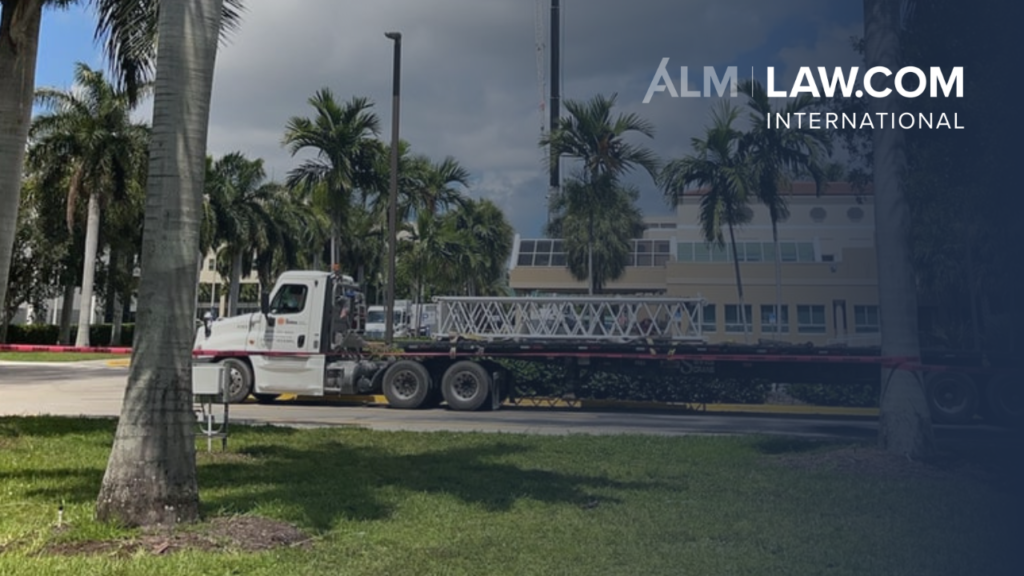
Quick Summary: When a construction disaster strikes a public-facing institution like a hospital, the legal fallout is immediate and the reputational stakes are immense. The crane collapse at HCA Mercy Hospital, which tragically claimed the life of Mario Bladimir Andino Renteria, has moved from a scene of chaos to the Florida court system. Using a “Lockstep” approach, legal and PR teams must now navigate the complex web of subcontractor liability while ensuring that the pursuit of justice for the victim’s family remains the central narrative.
The Inherent Friction: Subcontractor Liability vs. Institutional Responsibility
In catastrophic construction accidents on corporate property, a “civil war” often breaks out regarding who ultimately bears the burden of safety.
On one side, General Contractors and Subcontractors often attempt to silo liability, pointing to specific technical failures or individual operator errors to shield the larger entity. On the other side, Victims and Institutional Property Owners (like hospitals) face the reality that a tragedy occurred under their watch. The friction arises when the institutional owner tries to distance itself from the “active” construction site, while the legal reality demands that someone be held accountable for the safety of every person on that property—worker or patient alike.
Why This Disconnect Is Dangerous
In high-profile court cases like the Mercy Hospital crane crash, a lack of unified strategy between the legal defense and the public narrative can lead to several critical failures:
Shifting Blame in the Press: If subcontractors begin publicly blaming one another, it creates a “guilty by association” effect for the hospital, damaging its reputation for safety and care.
Secondary Victimization: When legal filings focus solely on technicalities and bypass the human loss, the public views the corporation as cold and negligent, leading to harsher jury perceptions.
Operational Paralysis: A construction site that remains a “legal crime scene” indefinitely can stall essential hospital expansions and public services, compounding financial losses.
The Freidin Brown “Safety Standards” Methodology
In representing the Renteria family, the firm Freidin Brown utilizes a methodology that focuses on Total Oversight Accountability. The legal strategy moves beyond the mechanical failure of the crane to examine the systemic failure of the safety protocol.
By framing the case as a violation of the “Hospital Safety Zone,” the legal team ensures that the narrative isn’t just about a machine that broke, but about a promise of safety that was failed. This approach aligns the legal pursuit of damages with the public’s desire for safer construction standards in densely populated areas.
Comparison: Technical Failure vs. Systemic Negligence
Understanding the legal distinction between a “freak accident” and a “preventable tragedy” is the foundation of this case.
| Feature | Technical Failure Argument | Systemic Negligence Argument (Lockstep) |
| Focus | A specific part or operator error | Failure of safety oversight and protocols |
| Narrative | “An unfortunate mechanical accident” | “A preventable failure of leadership” |
| Legal Strategy | Isolating the specific subcontractor | Holding all entities in the chain accountable |
| PR Goal | Minimizing “unpredictable” risk | Demanding higher safety standards |
| Outcome | Settlement based on equipment value | Justice based on life value and reform |
3 Steps to Managing Catastrophic Liability Narratives
For firms handling disasters of this magnitude, bridging the gap between the courtroom and the community is essential for a just outcome.
1. The “Safety Zone” Narrative Frame
In the press, the location matters as much as the incident. A construction site at a hospital carries a higher moral and legal expectation of safety.
Action: Frame all communications around the “Duty of Protection.” The narrative should emphasize that construction in a high-traffic, sensitive area requires a standard of care that exceeds standard job sites.
2. Immediate Evidence Preservation
In crane collapses, technical data can be lost or “cleaned up” quickly.
Action: Deploy a “Lockstep” rapid response team to secure black-box data and maintenance logs before they are buried in subcontractor litigation. Publicizing the search for truth rather than just damages builds credibility with the press.
3. Humanizing the “Plaintiff”
Mario Bladimir Andino Renteria was more than a statistic; he was a worker in a space dedicated to saving lives.
Action: Ensure all public-facing statements from the legal team lead with the human loss. In the “Golden Hour” after an accident, the public is looking for empathy first and legal reasoning second.
Frequently Asked Questions (FAQ)
Who is liable in a construction accident at a hospital?
Liability can be shared among the hospital (property owner), the general contractor, and the specific crane subcontractor. Under Florida’s “Non-Delegable Duty” doctrine, certain safety responsibilities cannot be passed off to others, meaning the property owner often remains legally connected to the incident.
How do crane collapses impact hospital operations and PR?
A crane collapse creates a “double crisis.” Beyond the tragedy, it can lead to hospital diversions, blocked emergency routes, and a loss of public trust in the facility’s safety. Effective PR must address both the human tragedy and the operational safety of the hospital.
What is the role of OSHA in a crane crash lawsuit?
OSHA investigations provide the technical “baseline” for negligence. If OSHA finds safety violations, it provides the legal team with powerful evidence of systemic negligence, which often leads to higher settlement values or jury awards.
Why is “Lockstep” collaboration vital for construction litigation?
Construction cases are technical and involve many parties. A Lockstep approach ensures the PR team doesn’t accidentally admit liability while the legal team is investigating, and ensures the legal strategy is supported by a public narrative that favors safety reform.
Is your firm prepared to handle the fallout of a high-profile disaster?
Contact the INGAGE team today to learn how we work in lockstep with leading trial firms to protect reputations and secure justice in catastrophic construction cases.