
Quick Summary:
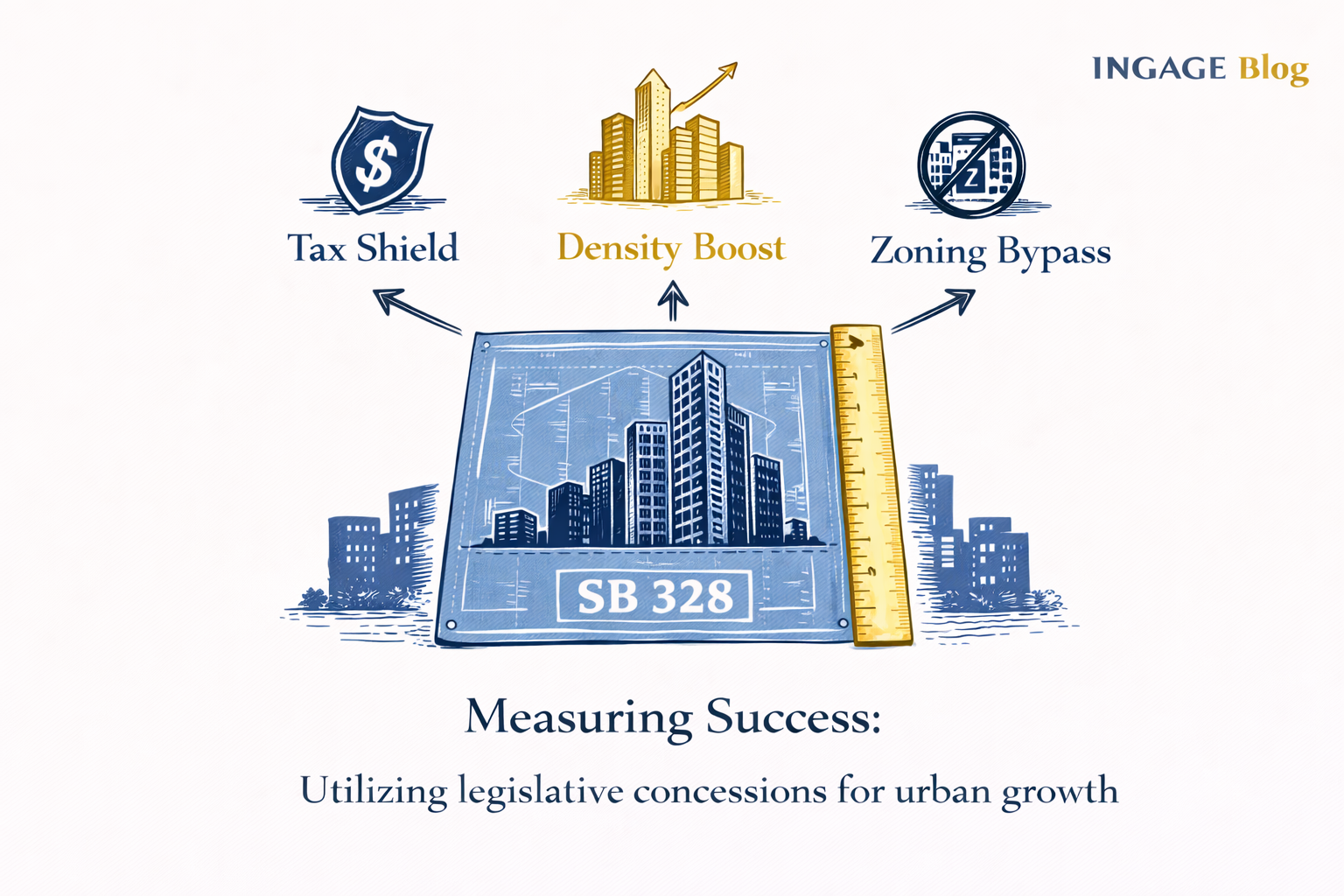
Florida’s housing crisis is meeting its legislative match. As the INGAGE Blog explores through recent media hits for Shubin Law Group and The Euclid Group, the newly signed “Glitch Bill” (SB 328) aims to sharpen the teeth of the Live Local Act. By offering developers enhanced density concessions and tax incentives while bypassing local zoning hurdles, this revamped law isn’t just a policy update—it’s a powerful catalyst designed to transform the skyline of Florida’s workforce housing.
The Inherent Friction: “Local Control” Vs. “State-Wide Demand”
The most significant tension in Florida real estate today is the battle over zoning authority.
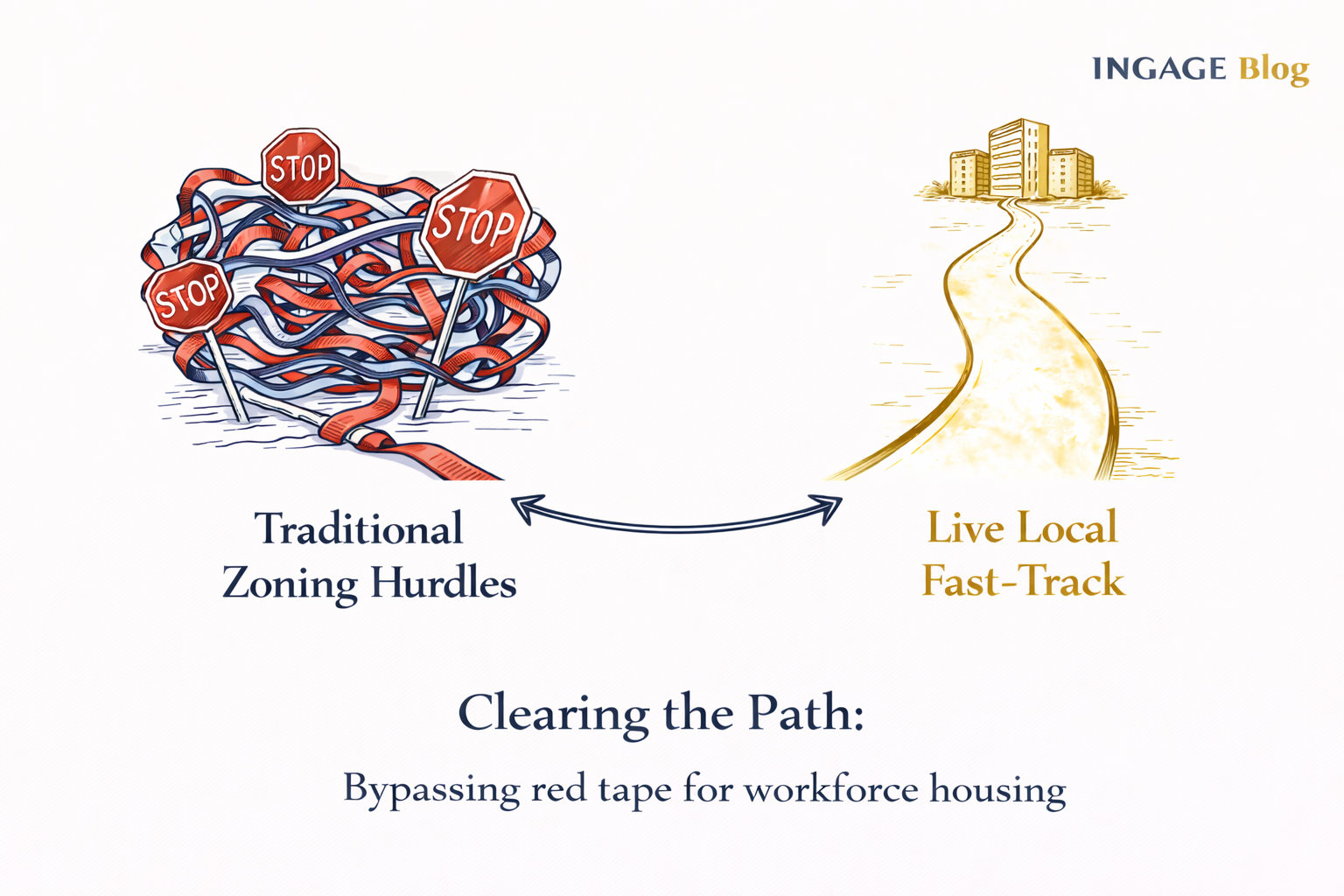
On one side is The Local Municipality. Cities and counties have historically guarded their zoning and density laws to maintain “neighborhood character” and manage infrastructure. On the other side is The Live Local Mandate. The State of Florida has superseded these local rules to fast-track affordable and workforce housing. The friction lies in the administrative “glitches”—where local governments initially used loopholes to block projects, the new bill now shuts those doors, prioritizing regional housing needs over local height and density restrictions.
Why This Disconnect Is Dangerous
INGAGE warns that developers who don’t understand the nuances of the “Glitch Bill” risk costly litigation and project delays.
The Entitlement Trap: Early versions of the Act left ambiguity around “highest allowed density.” Some developers moved forward only to be blocked by local reinterpretations. Without the legal clarity provided by the revamp, millions in capital can be tied up in zoning disputes.
The Tax Exemption Void: The bill provides massive property tax exemptions, but only for those who meet specific workforce housing thresholds (up to 120% AMI). Missing these compliance markers can turn a profitable project into a financial liability overnight.
The NIMBY Backlash: While the law bypasses local boards, it doesn’t bypass local sentiment. Developers who rely purely on the law without a strategic Public Relations plan to educate the community face significant reputational damage.
The INGAGE Methodology: The “Strategic Entitlement” Strategy
The INGAGE approach advises real estate leaders to use the law as a “Shield and a Sword.”
This methodology involves more than just reading the statutes. We recommend an integrated approach where Land Use Attorneys (like Shubin Law Group) and Development Experts (like The Euclid Group) work together to maximize the Act’s concessions. By using the “Glitch Bill” to lock in entitlements that were previously impossible, developers can create high-density “Urban Infill” projects that are both socially responsible and highly profitable.
Comparison: The Original Act vs. The 2024 “Glitch Bill”
Here is what has changed for Florida developers.
| Feature | Original Live Local Act (2023) | Revamped “Glitch Bill” (2024) |
| Height Allowances | Ambiguous based on “nearby” sites | Clarified to include sites within 1/4 mile |
| Density Rules | Could be limited by local interpretation | Locked in at highest allowed in the jurisdiction |
| Industrial Zoning | Partial coverage | Expanded to include more commercial/mixed-use |
| Tax Incentives | Subject to local negotiation | Standardized state-wide exemptions |
| Parking Requirements | Locally controlled | Reduced requirements near transit hubs |
3 Steps To Leverage the Revamped Act
Based on the latest legislative shifts, here is the INGAGE blueprint for development.
1. Identify “Missing Middle” Sites
Look where others see barriers.
Action: Audit your portfolio for commercial or industrial-zoned land in high-value urban areas. Under the Live Local Act, these can now be transformed into residential hubs without the need for a “Use Variance” or a lengthy rezoning process.
2. Maximize the Tax Exemption Window
The math only works if you stay compliant.
Action: Work with a specialized firm to certify that at least 40% of your units meet the workforce housing criteria. This unlocks the property tax exemption, which can be the difference-maker in a high-interest-rate environment.
3. Lead with “Community Benefits”
The law is your right; communication is your reputation.
Action: Don’t just build; narrate. Use PR to frame your project as a solution for local teachers, police officers, and nurses. By positioning your “Live Local” project as essential community infrastructure, you build political and social capital.
Frequently Asked Questions (FAQ)
What exactly is the “Glitch Bill” (SB 328)?
It is an amendment to the original Live Local Act designed to fix ambiguities. It clarifies height and density rules, protects developers from local zoning workarounds, and ensures tax exemptions are applied consistently across the state.
How does this affect local zoning boards?
In many cases, it removes their ability to deny a project based on density or height, provided the project meets the workforce housing requirements. The local board still handles site plan reviews (landscaping, traffic), but the “Use” and “Density” are now state-protected.
Who qualifies for the workforce housing units?
Units must be affordable for individuals or families making up to 120% of the Area Median Income (AMI). This is often referred to as “The Missing Middle”—the professionals who make too much for subsidies but too little for luxury market rates.
Why is this bill controversial?
Some local governments feel it strips them of their home-rule authority and could lead to “out of scale” buildings in sensitive areas. However, proponents argue it is the only way to solve the state’s massive housing shortage.
Is your development strategy stuck in the old rules?
Contact the INGAGE team today to ensure your real estate firm is utilizing the full power of the Live Local Act to drive growth.