

Quick Summary:
For two decades, the goal of digital marketing was simple: rank number one on Google. But as AI-driven search engines like ChatGPT, Gemini, and Google AI Overviews take over, the rules have changed. We are shifting from SEO (Search Engine Optimization) to GEO (Generative Engine Optimization). As INGAGE President Katherine Doble outlines in the Daily Business Review, your goal is no longer just to be found—it is to be cited as the definitive answer.
The Inherent Friction: “The Algorithm” Vs. “The Answer”
Marketing teams today are caught between two distinct behaviors.
On one side is the Traditional SEO Strategy. This relies on keywords, meta tags, and backlink volume to game the Google algorithm and win a click to a website. On the other side is the New User Behavior. Users are asking complex questions to AI agents and expecting immediate, synthesized answers without ever clicking a link. The friction lies in the fact that a strategy optimized for clicks (SEO) often fails to provide the structure and authority needed for citations (GEO).
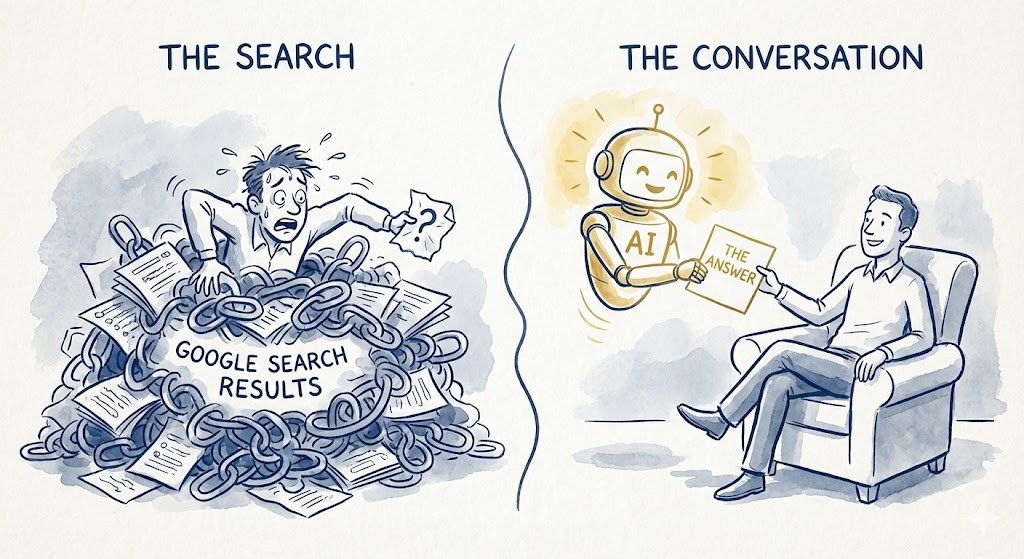
Why This Disconnect Is Dangerous
Katherine Doble warns that clinging to old SEO metrics in a GEO world leads to “Digital Invisibility.”
- The “Zero-Click” Threat: If your content is optimized only for clicks, you will lose. AI search engines provide the answer directly on the results page. If you aren’t the source of that answer, you don’t exist.
- Loss of Authority: AI models prioritize “trusted entities.” If your brand hasn’t established itself as a credible authority through PR and structured data, the AI will bypass you for a competitor who has.
- The Traffic Illusion: You might still see traffic from legacy keywords, but high-intent users (those ready to buy) are increasingly using AI to make decisions. Missing them means missing the most valuable leads.
The INGAGE Methodology: Optimizing for the Machine
The INGAGE approach to GEO moves beyond keywords and focuses on “Entity Authority.”
Generative engines don’t just match words; they understand concepts. To win in GEO, you must convince the AI that your brand is the Subject Matter Expert. This requires a pivot from “Link Building” to “Citation Building”—using Digital PR to get mentioned in high-authority news outlets that AI models use as training data. It also means structuring your content so machines can easily parse, understand, and summarize it.
Comparison: The Rules of Engagement
The game has changed. Here is how the new GEO playbook differs from the old SEO standard.
| Feature | SEO (The Old Way) | GEO (The New Way) |
| Primary Goal | Rank #1 and get a click | Be the “Cited Source” in the answer |
| Key Metric | Organic Traffic / Pageviews | Share of Voice / Brand Mentions |
| Content Strategy | Keywords & Word Count | Structure, Facts & Direct Answers |
| Authority Source | Backlinks from anywhere | Citations from Trusted Media (PR) |
| User Journey | Search -> Click -> Read -> Buy | Ask -> Read Answer -> Buy |
3 Steps To Pivot to GEO
Based on Katherine Doble’s insights, here is how to future-proof your digital presence.
1. Build “Digital PR” Citations
AI models trust news sites more than blogs.
- Action: Stop buying low-quality backlinks. Invest in a PR strategy that gets your experts quoted in reputable publications (Forbes, Law.com, Industry Trade Journals). These citations teach the AI that you are a trusted entity in your field.
2. Structure for Synthesis
AI needs to read your data easily.
- Action: Update your website with clear Schema markup and “machine-friendly” formatting. Use bullet points, data tables, and direct “Question & Answer” headers (e.g., “What is X?”) to make it easy for the AI to grab your content and use it as the answer.
3. Focus on “The Long Tail” of Intent
AI users ask conversational questions (“Who is the best lawyer for international trade disputes in Miami?”).
- Action: Move away from two-word keywords. Create content that answers specific, complex questions your clients are actually asking. Become the best answer for the hardest questions.

Frequently Asked Questions (FAQ)
Is SEO dead?
No, but it has been demoted. SEO is still vital for navigational searches (finding your website), but GEO is now essential for informational searches (answering questions). You need a hybrid strategy to capture both.
How do I know if I am ranking in AI search?
Currently, metrics are harder to track than Google Analytics. However, you can test your “Share of Voice” by asking platforms like ChatGPT and Gemini questions related to your industry and seeing if your brand is recommended or cited.
Why is PR important for AI Search?
Large Language Models (LLMs) are trained on high-quality data sets, which heavily weight established news and media sites. Being mentioned in these “high-trust” zones signals to the AI that your brand is legitimate and authoritative.
Can I optimize my existing content for GEO?
Yes. Go back to your high-traffic pages and add a “Key Takeaways” summary at the top. Ensure you have clear H2/H3 headers and direct answers to common questions. This “clean code” approach helps AI parse your content better.
Is your brand ready for the AI era?
Contact the INGAGE team today to audit your digital presence and build a GEO strategy that ensures you are the answer, not just another link.
For a deeper look at Katherine’s takeaways on the shift from SEO to GEO in the age of AI search, read the full article online at Daily Business Review.