Quick Summary:
The global legal landscape is shifting faster than ever—treaties unravel, tariffs rise, and sanctions expand overnight. In this volatile environment, legal expertise alone is not enough to build a practice; you need visibility. As outlined in the INGAGE Blog, international law attorneys who master “Newsjacking”—inserting their insights into breaking geopolitical news—transform from passive observers into trusted authorities, securing the high-value cases that traditional networking often misses.
The Inherent Friction: “Legal Caution” Vs. “Media Velocity”
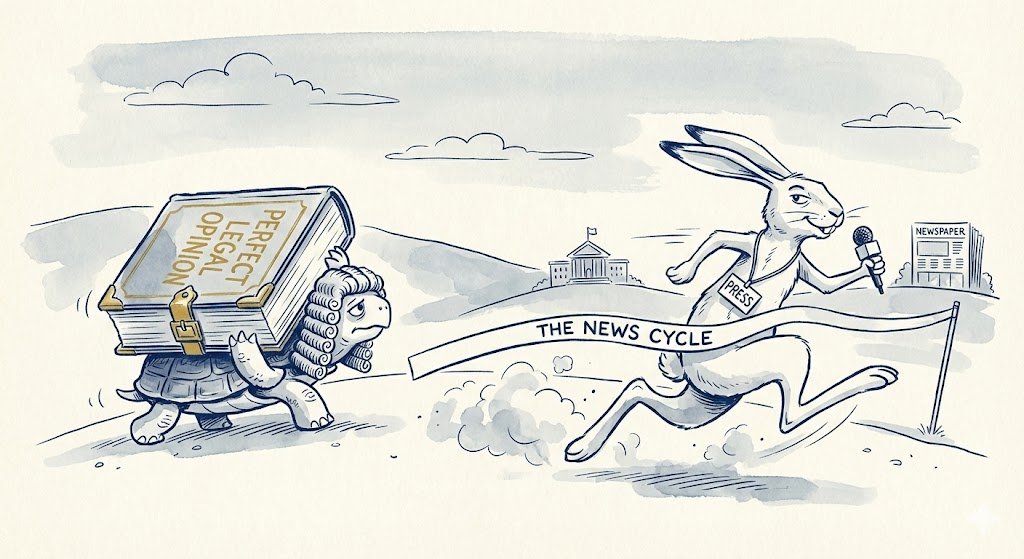
International law attorneys often operate in a culture of extreme deliberation. Every word is weighed, and every statement is vetted. However, the modern media cycle operates on speed.
On one side is The Attorney, who wants to wait until the dust settles to offer a definitive opinion. On the other side is The Journalist, who needs a quote now to explain why a new sanction matters to their readers. The friction lies in the fact that by the time the attorney feels “safe” to speak, the story has already been written with a competitor’s quote.
Why This Disconnect Is Dangerous
INGAGE warns that silence in a time of crisis is a strategic error for international firms.
The “Invisible Expert” Syndrome: You may be the world’s leading expert on maritime arbitration, but if you aren’t quoted when a ship gets stuck in the Suez Canal, the market assumes you aren’t relevant.
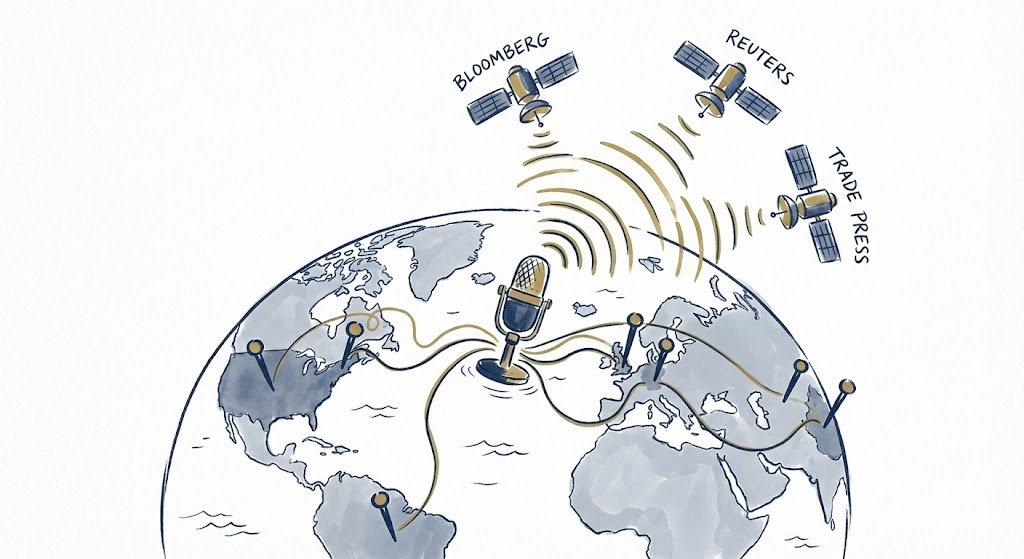
Missed Referrals: Corporate counsel rely on trade publications (like Bloomberg or FreshPlaza) to find counsel. If you are only publishing in obscure legal journals, you are missing the clients who actually pay the bills.
The Reputation Vacuum: If you don’t define the narrative around a new regulation, your competitors will. Being the first to explain “what this means” establishes you as the market leader.
The INGAGE Methodology: Strategic Newsjacking
The INGAGE approach is to use “Geopolitical Monitoring” to fuel your PR.
This isn’t about chasing every ambulance; it’s about chasing every treaty. When a major international event happens (e.g., a new tariff on agricultural exports), INGAGE helps attorneys insert themselves into the story immediately. By translating complex legal jargon into “layman’s terms” for reporters, you become the go-to source. This builds a “Referral Engine” where your media presence drives inquiries from top-tier firms and institutional clients.
Comparison: The Academic vs. The Authority
Here is the difference between being smart and being influential.
| Feature | The “Academic” Attorney | The “Media Authority” (INGAGE Client) |
| Publication Venue | Law Reviews (read by students) | Trade Press (read by CEOs) |
| Response Time | Weeks (after careful review) | Hours (while news is breaking) |
| Topic Focus | Legal Theory | Business Impact |
| Audience | Other Lawyers | Potential Clients & Referrers |
| Outcome | Peer Respect | New Business & Global Influence |
3 Steps To Build Global Authority
Based on the strategies shared in the article, here is how to turn international chaos into a practice-building opportunity.
1. Monitor the “Business” News, Not Just Legal News
Your clients are worried about their supply chains, not just case law.
Action: Set up alerts for the industries you serve (e.g., “Agribusiness Tariffs,” “Maritime Chokepoints”). When a story breaks, draft a 3-bullet point “Client Alert” that explains the business impact, not just the legal text.
2. Speak “Trade,” Not “Legalese”
Reporters and CEOs don’t care about the statute number; they care about the bottom line.
Action: specific media training is crucial. Learn to explain why a regulation matters in plain English. For example, instead of citing the “Force Majeure clause,” explain “how this allows you to exit the contract without penalty.”
3. Leverage the “Bilingual” Advantage
International law is often cross-border and cross-lingual.
Action: If you speak Spanish, French, or Mandarin, you have a massive advantage. Pitching yourself to outlets like Univision or international trade papers doubles your reach and positions you as the bridge between jurisdictions.
Frequently Asked Questions (FAQ)
How do I protect client confidentiality while talking to the press?
You never discuss specific client details. Instead, you discuss “trends” and “hypotheticals.” For example, “We are seeing a rise in arbitration cases related to X,” rather than “My client is suing Y.” This positions you as an expert without breaching ethics.
Which publications matter most for international law?
It depends on your niche. While Law360 is great for peer recognition, industry-specific trade publications (like FreshPlaza for agriculture or Lloyd’s List for maritime) are often where the actual clients are looking for answers.
What is “Newsjacking”?
Newsjacking is the art of injecting your ideas into a breaking news story. For example, if a new trade agreement is signed, you immediately pitch a reporter with a quote about how it will affect local businesses. It rides the wave of the existing news cycle to get you free publicity.
How long does it take to see results?
PR is a long-term play, but “Newsjacking” can yield immediate hits. One well-timed quote in Bloomberg can lead to panel invitations and referrals within weeks. Consistency is key to turning those hits into a sustained practice.
Is your expertise crossing borders?
Contact the INGAGE team today to build a media strategy that ensures your voice travels as far as your legal work does.
Visit Ingage.biz to learn more and schedule a discovery call to explore how we can position you as a go-to source in the international legal space.