Quick Summary: Video is no longer a “nice-to-have” for universities; it is the primary language of recruitment and alumni relations. However, as INGAGE CEO Katherine Doble points out, many institutions treat Facebook video like a digital filing cabinet for long-form lectures. To succeed in 2026, higher education must move in lockstep with the platform’s technical requirements—prioritizing mobile accessibility, silent viewing, and strategic brevity to turn viewers into applicants.
The Inherent Friction: “Academic Depth” Vs. “Digital Brevity”
In higher education, the core conflict lies between the institution’s nature and the platform’s algorithm.
On one side, Academia thrives on depth, nuance, and long-form explanation. Professors and administrators often feel that a 60-second video “dumb downs” their complex research or campus culture. On the other side, The Facebook Audience (particularly prospective students and busy parents) has a “scroll-stop” window of less than three seconds.
If an institution insists on posting 10-minute “talking head” videos, they aren’t just being ignored—they are being penalized by the algorithm, reducing the reach of all future posts.

Why This Disconnect Is Dangerous
The gap between what admissions teams want to say and what students actually watch is widening. As highlighted at the Social Media Strategies Summit for Higher Education in New York, experts like Charlie Shin warn that failing to adapt to mobile-first video behaviors results in a ‘silent campus’—where your content exists, but no one is listening. Ignoring the unique “rules” of Facebook video results in more than just low view counts:
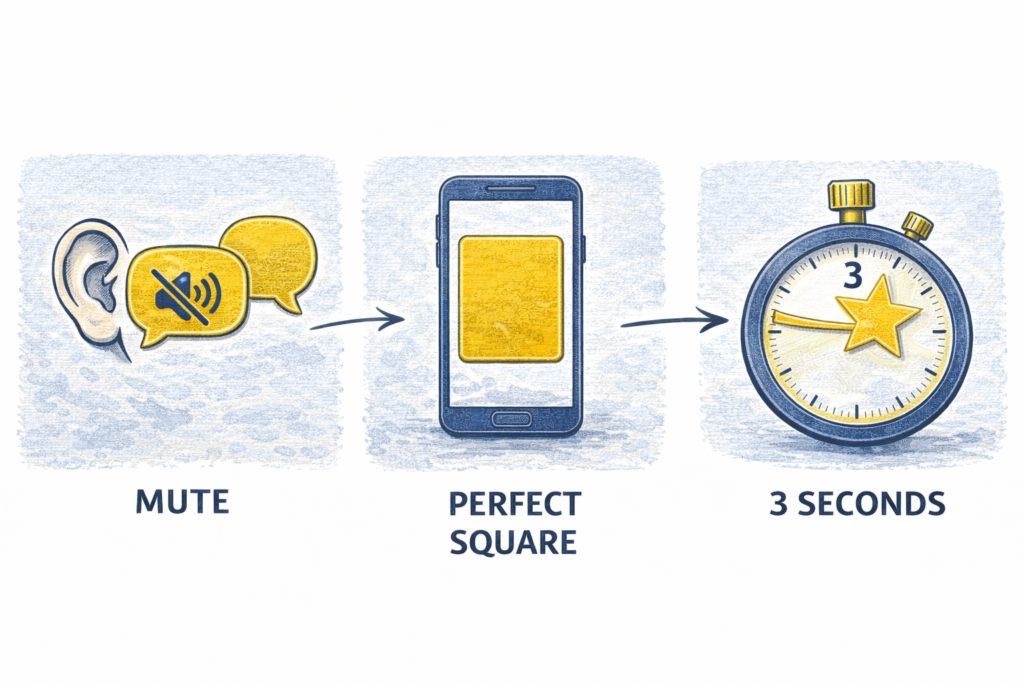
- Accessibility Failures: Over 80% of Facebook videos are watched without sound. If your video relies on audio to deliver its message, you are effectively excluding the vast majority of your audience.
- Wasted Budget: High-production-value videos that aren’t optimized for “Square” or “Vertical” formats look amateurish and “broken” on mobile devices, which is where 98% of users interact with the app.
- Lost Recruitment: Prospective students equate a school’s digital presence with its level of innovation. Clunky, slow-loading, or uncaptioned video content signals an institution that is “behind the times.”
The INGAGE “Mobile-First” Methodology
Katherine Doble’s approach to university video content centers on Contextual Consumption. We don’t just ask what the message is, but where and how the audience is seeing it.
The INGAGE methodology requires that every video pass the “Silent Test”: Can a viewer understand the core value proposition of the video within 5 seconds without ever turning on their speakers? By prioritizing visual storytelling and “burned-in” captions, institutions can ensure their message lands regardless of the user’s environment.
Comparison: Higher Ed Video Standards
| Feature | The “Traditional” Lecture Style | The “INGAGE Lockstep” Style |
| Video Ratio | 16:9 Landscape (Cinematic) | 1:1 Square or 4:5 Vertical (Mobile) |
| First 3 Seconds | University Logo / Intro Music | The “Hook” / Immediate Value |
| Captions | Optional / Auto-generated (messy) | “Burned-in” / Stylized Brand Fonts |
| Call to Action | “Visit our website” (General) | “Tap Link in Bio” / Specific UTM Link |
| Duration | 3 – 5 Minutes | 15 – 60 Seconds (for high engagement) |
3 Steps to Optimize Your Campus Video Strategy
To align your institution’s video content with modern platform behavior, follow this three-step protocol.
1. Optimize for the “Silent Majority”
The vast majority of your audience is watching in public spaces or during “micro-moments” where sound is unavailable.
- Action: Do not rely on Facebook’s auto-captioning, which often fails with academic terminology. Hard-code your captions using your brand’s Gold (#A28741) or Navy (#1D2B42) colors to ensure readability and brand consistency.
2. The “Square” Content Pivot
Landscape video (16:9) is for YouTube and TVs. On Facebook, square video (1:1) takes up 78% more screen real estate in the newsfeed.
- Action: Audit your content creation workflow. Ensure videographers are “framing for the square” so that critical information isn’t cut off when the video is cropped for mobile feeds.
3. The “Three-Second” Hook Rule
Institutional videos often start with a slow fade-in or a static logo. On Facebook, this is “digital suicide.”
- Action: Lead with your most compelling footage—a vibrant campus event, a breakthrough lab moment, or a student testimonial. Save the university logo and the “Produced By” credits for the very end.
Frequently Asked Questions (FAQ)
Should we use Facebook Live or pre-recorded video for recruitment?
Both have a place. Pre-recorded, polished video is best for “brand pillars” (campus tours, mission statements). Facebook Live is superior for Q&A sessions where prospective students can interact with admissions counselors in real-time, building immediate trust.
How do we handle captions for complex scientific or legal terms?
Avoid auto-generation tools. Use a service or an internal editor to manually type and time your captions. In higher ed, a typo in a technical term doesn’t just look bad—it undermines your academic credibility.
Is Facebook still the right platform for reaching students in 2026?
While students may spend more time on other apps, Facebook remains the primary platform for parents and influencers. Since parents are often the primary financial decision-makers in higher education, your Facebook video strategy must speak to their concerns (safety, ROI, and community).
What is the ideal length for a university highlight video?
For the main feed, 60 seconds is the “sweet spot.” If you have a longer story to tell, post a 30-second “teaser” on Facebook that links to the full-length version hosted on your university’s “Digital Anchor” (website).
Is your institution’s video strategy stuck in the past?
Contact the INGAGE team today to transform your academic content into a high-performance digital asset that drives enrollment and alumni engagement.