

Quick Summary: Navigating the Florida Bar’s marketing review process is often seen as a bureaucratic hurdle, but it is a critical safeguard for legal reputation. The “Lockstep” solution involves moving from a reactive “submit and hope” mentality to a proactive, disciplined workflow. By mastering the 20-day filing rule and the 15-day review window, law firms can eliminate the risk of disciplinary action and ensure their growth strategies move forward without costly legal interruptions.
The Inherent Friction: “Growth Speed” Vs. “Regulatory Oversight”
For ambitious law firms, the primary conflict lies in the timing of the market. Marketing teams operate in a “real-time” environment, wanting to capitalize on trends, news, or immediate business needs. However, the Florida Bar Standing Committee on Advertising (SCA) operates on a deliberate, rules-based schedule.
This creates a “Civil War” within the firm: the Marketing Department pushes for immediate dissemination to capture leads, while the Managing Partner or Compliance Officer insists on the mandatory 20-day pre-filing requirement. Ignoring this friction doesn’t just result in a rejected ad—it can lead to formal grievances and a tarnished firm record.
Why This Disconnect Is Dangerous
A lack of coordination between creative vision and Bar rules creates high-stakes vulnerabilities for Florida lawyers.
The Cost of Silence: If a firm waits until an ad is fully produced to check for compliance, they risk wasting thousands of dollars on non-compliant media that must be scrapped.
The “Grey Period” Risk: Using an ad before the 15-day review period is complete—without receiving an explicit approval or a “no-response” green light—leaves the firm open to retroactive penalties.
Preliminary vs. Final Fallacy: Relying solely on a “preliminary opinion” on a draft is a common trap. A preliminary “maybe” does not equal a final “yes,” and failing to submit the final version 20 days prior to use is a rule violation.
The “Lockstep” Methodology: The Proactive Filing Workflow
Katherine Doble’s approach to Bar reviews is built on Redundant Compliance. Instead of treating the Bar as an adversary, we treat the review process as a quality-control milestone.
The methodology requires that the Filing ID be the final step of the creative process, not an afterthought. By building the 20-day waiting period directly into the campaign calendar, firms can ensure that by the time their media buy is active, the “Safe to Use” letter (or the 15-day expiration of the Bar’s response window) is already in hand. This transforms the review process from a bottleneck into a strategic shield.
Comparison: The Review Timeline vs. The Appeals Process
Knowing when you are “safe” to publish depends on understanding these two distinct procedural paths.
| Stage | Action / Requirement | Outcome / Timeline |
| Initial Filing | Submit ad, fee, and usage details | Review clock starts (Day 0) |
| The 15-Day Rule | Bar reviews for Rule 4-7 compliance | Decision must be sent by Day 15 |
| Implicit Approval | No communication received from Bar | Ad is deemed approved for use |
| Non-Compliance | Receive “Notice of Non-Compliance” | Must stop use/Modify immediately |
| SCA Appeal | File written request for 2nd opinion | Reviewed at next committee meeting |
| Board Appeal | Written request to Board of Governors | Final administrative review level |
3 Steps to a Seamless Bar Approval
Follow this sequence to ensure your ads move through the Standing Committee on Advertising without friction.
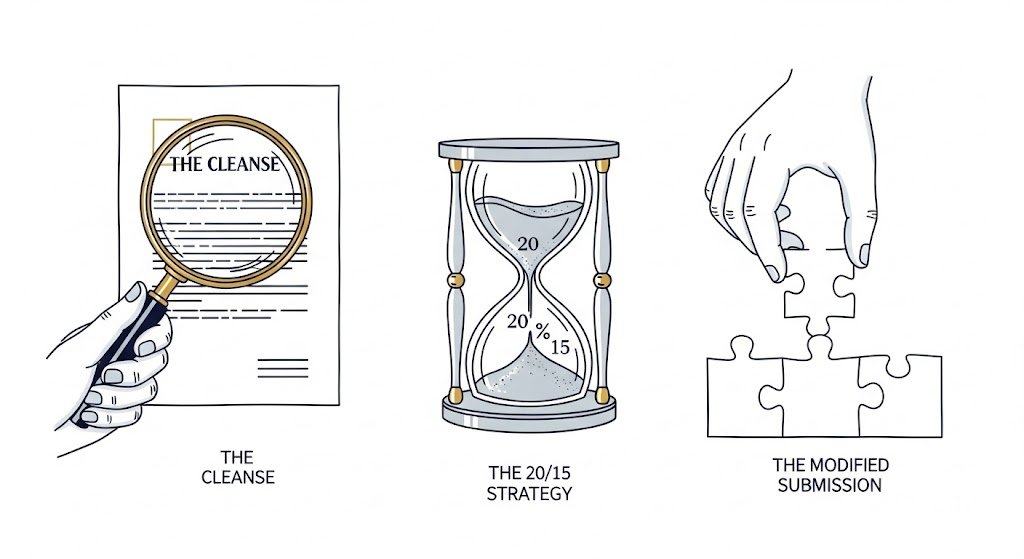
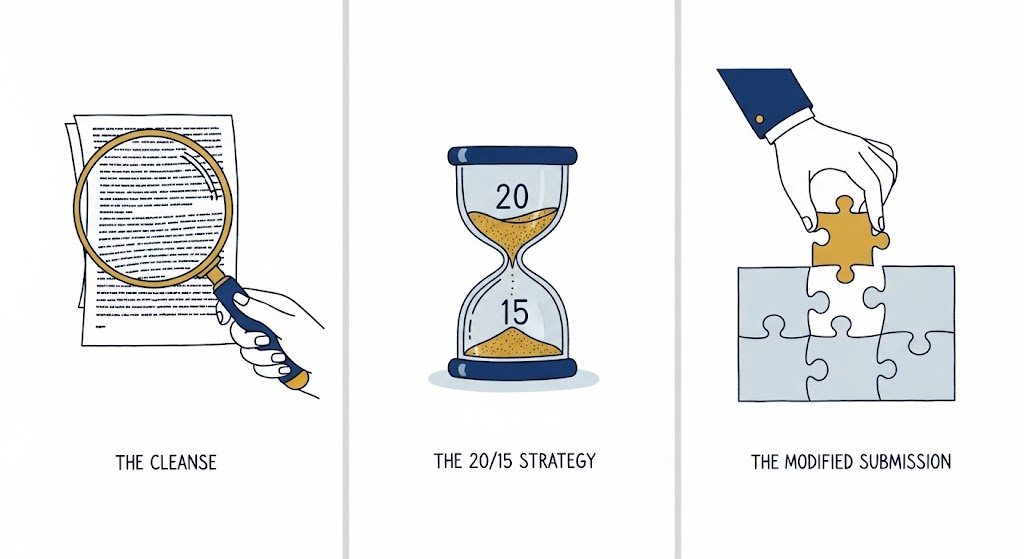
1. The Pre-Filing “Cleanse”
Before paying the filing fee, perform an internal audit against Florida Rules Subchapter 4-7.
Action: Check for “prohibited visual patterns” and ensure all “required disclosures” (like the “Leads” disclosure if applicable) are clearly legible. This prevents a “Request for More Info” which resets the review clock.
2. The 20/15 Submission Strategy
Timing is everything. You must file 20 days before use, but the Bar only has 15 days to respond.
Action: File on “Day 1.” If you hear nothing by “Day 16,” you are legally cleared to launch on “Day 21.” Documenting the date the Bar received the package is your ultimate legal protection.
3. Mastering the “Modified Submission”
If an ad is rejected, do not just argue—adapt.
Action: Submit a modified version of the ad that directly addresses the stipulations in the non-compliance letter. Often, a small change in wording or the addition of a disclaimer is all that stands between a rejection and a revenue-generating campaign.
Frequently Asked Questions (FAQ)
What happens if the Florida Bar doesn’t respond within 15 days?
If the Bar does not provide an opinion within 15 days of receiving your complete filing, the advertisement is considered approved. However, you must still wait until the full 20-day pre-filing period has passed before you can officially publish or air the ad.
Do I need to file every single social media post for review?
Not necessarily. Certain types of information are exempt from the filing requirement, such as “tombstone” information, basic contact details, or responses to specific consumer requests. However, any post that promotes your legal services or makes claims about your results generally requires a filing.
What is the fee for filing an advertisement with the Florida Bar?
As of the current rules, there is a standard filing fee for each advertisement submitted. If an ad is determined to be “exempt” after you have already paid, the Bar will return your fee along with a notice that no opinion is required.
Can I appeal a “Non-Compliance” decision?
Yes. You have 30 days to file a written request for a second opinion from the Standing Committee on Advertising (SCA). If they sustain the original rejection, you can further appeal to the Board of Governors.
Is your firm’s marketing stuck in the review bottleneck?
Contact the INGAGE team today to implement a “Lockstep” filing system that ensures your firm stays compliant while staying ahead of the competition.