

Quick Summary: During a global health crisis or systemic shift, educational institutions face a unique challenge: they must act as a primary source of truth for students, parents, and staff simultaneously. As INGAGE CEO Katherine Doble highlights, the difference between chaos and calm is a centralized, “Source-of-Truth” strategy. By moving in lockstep across digital platforms, schools can minimize misinformation and maintain the trust necessary to continue their educational mission under pressure.
The Inherent Friction: “Urgent Transparency” Vs. “Institutional Precision”
In times of crisis, educational institutions are pulled in two opposing directions.
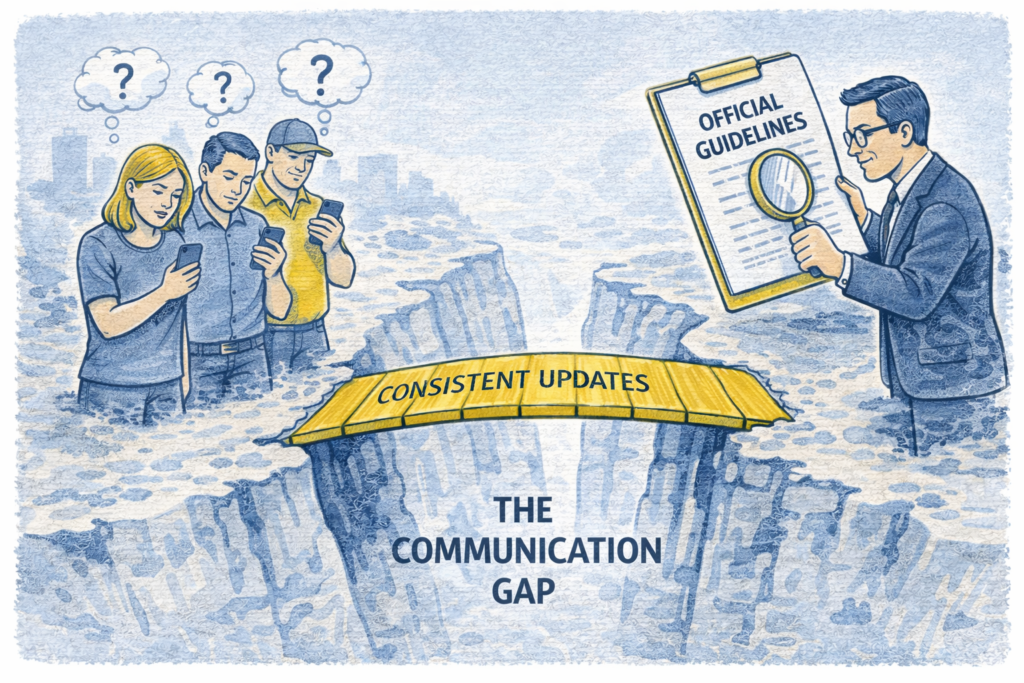
On one side, The Community (Parents & Students) demands immediate, transparent updates. In the absence of information, they turn to social media rumors, which breeds anxiety. On the other side, Administration and Legal Teams require precision. They must vet every statement against health department guidelines and privacy laws (like FERPA), which takes time.
This friction creates a “Communication Gap.” If the gap stays open too long, the institution loses control of the narrative, and “spontaneous” misinformation becomes the community’s primary reality.
Why This Disconnect Is Dangerous
When communication is fragmented during a crisis, the stakes extend beyond simple confusion:
- Erosion of Authority: If a parent hears an update from a Facebook group before they hear it from the Principal, the school’s authority is compromised.
- Information Fatigue: Sending too many uncoordinated emails from different departments leads to “inbox blindness,” where stakeholders miss critical safety instructions.
- Compliance Risk: Inaccurate health advice or accidental disclosure of student data in a rush to communicate can lead to significant legal liability.
The INGAGE “Source-of-Truth” Methodology
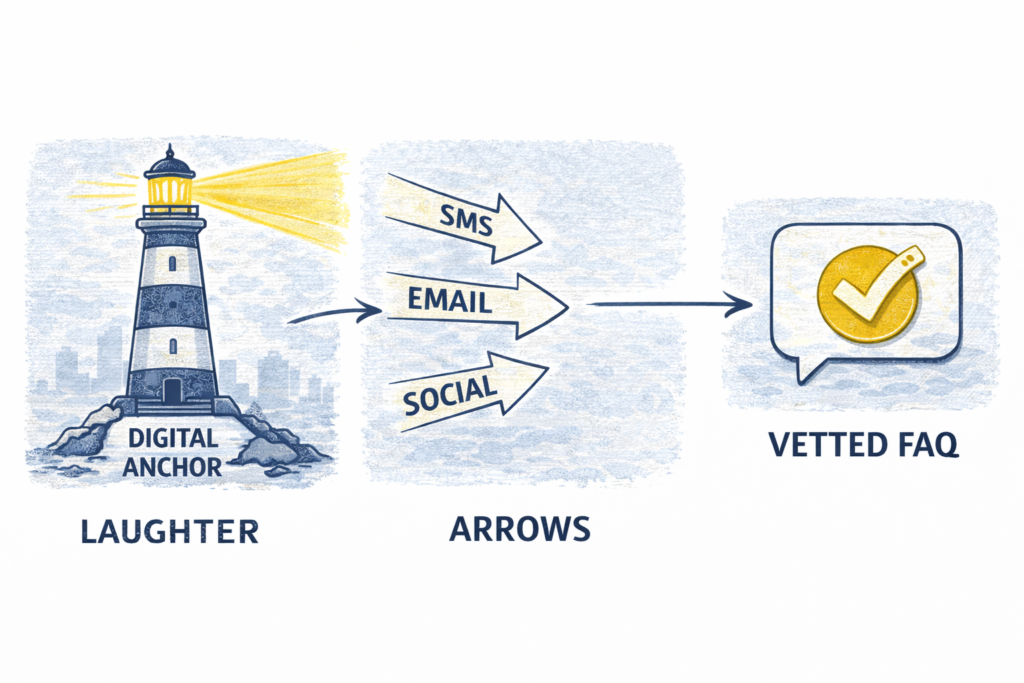
Katherine Doble’s methodology for educational crisis PR focuses on Centralized Dissemination. Rather than treating every social media platform as a unique broadcast, INGAGE treats the institution’s website as the “Single Source of Truth.”
All other channels (Email, SMS, Instagram, Twitter) serve as “Pointers” that direct the community back to a central, vetted landing page. This ensures that even if a situation evolves rapidly, the community knows exactly where to find the most current, un-distorted facts.
Comparison: Crisis Communication Models
| Feature | The “Reactive” Model | The “INGAGE Lockstep” Model |
| Messaging Control | Multiple departments send varied info | One centralized “Source of Truth” page |
| Response Time | Delayed by departmental silos | Pre-approved templates & rapid vetting |
| Social Media Use | Used for full updates (fragmented) | Used as “Pointers” to the main site |
| Primary Goal | Stop the immediate “fire” | Build long-term institutional trust |
| Audience Focus | General/Broad | Segmented (Staff vs. Parents vs. Students) |
3 Steps to Stabilize Online School Communication
To maintain order during a crisis, follow this three-step protocol to align your digital presence with institutional goals.
1. Establish the “Digital Anchor”
Before sending a single mass email, create a dedicated “Alert” landing page on your website.
- Action: This page should be clean, mobile-optimized, and timestamped. Every time an update is made, the timestamp changes. This prevents old, outdated information from being shared as “current” news.
2. Segmented Multi-Channel “Pointing”
Different stakeholders use different platforms. You must meet them where they are, but with a singular message.
- Action: Use SMS for urgent “Immediate Action” items, Email for detailed “Policy Changes,” and Social Media for “Community Support” and morale. All three must contain a direct link back to your “Digital Anchor” for the full context.
3. The Feedback Loop & FAQ Management
In a crisis, the same questions will be asked hundreds of times. Do not answer them individually.
- Action: Assign a team member to monitor comments and inbound emails to identify “Trending Questions.” Update the FAQ section on your central landing page daily. When a parent asks a question, point them to the FAQ. This ensures everyone receives the exact same, vetted answer.
Frequently Asked Questions (FAQ)
How often should we update the community during a crisis?
Consistency is more important than frequency. If you commit to a daily 4:00 PM update, stick to it—even if the update is “no new changes.” This predictable cadence reduces anxiety and prevents stakeholders from seeking information elsewhere.
Should we turn off social media comments during a school crisis?
Generally, no. Turning off comments can signal that the institution is hiding something. Instead, use the “Hidden Words” filter for profanity and have a moderator active. If a comment contains a valid question, answer it by linking to your official FAQ page.
How do we handle conflicting information from local health authorities?
Always cite your source. If you are following CDC or local health department guidelines, state that clearly. If those guidelines change, update your “Digital Anchor” immediately and note the time of the change to maintain transparency.
What is the best way to communicate with staff vs. parents?
Staff should always be briefed before parents. An internal portal or a dedicated “Staff-Only” email list ensures your frontline employees are not hearing school news from the parents they serve, which preserves institutional morale.
Is your institution prepared for the next disruption?
Contact the INGAGE team today to audit your crisis communication plan and ensure your digital strategy is as resilient as your mission.